
Native American Perspectives on Human Dignity

What perspectives do Native American traditions bring to the notion of integral human development? How might such traditions help us understand human dignity? Given past injustices, how can we work together to build more inclusive societies that advance the flourishing of all people? Integral human development is a holistic model of human flourishing articulated in Catholic social teaching and resonant in multiple religious, humanistic, and philosophical traditions worldwide. Studying different traditions can shed new light on this cross-disciplinary approach to human dignity, which proposes solutions that consider the whole person. Native American students, academics, and professionals explore these questions together.

This event was recorded in April 2022, and was presented by the Ansari Institute for Global Engagement with Religion and co-sponsored by the University of University of Notre Dame’s Nanovic Institute for European Studies and Department of American Studies in the College of Arts & Letters.

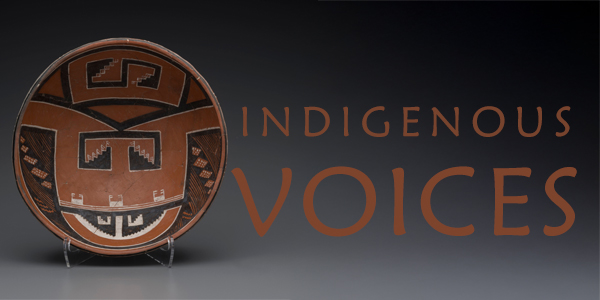
Indigenous Voices is co-sponsored on ThinkND by the Ansari Institute for Global Engagement with Religion, Kroc Institute for International Peace Studies, the Initiative on Race and Resilience, the Raclin Murphy Museum of Art, the College of Arts & Letters Native American Initiatives, and the Native American Alumni of Notre Dame.

The panel, moderated by Abigail Ginzburg and introduced by Charles Powell, exposed a core tension: while IHD seeks the holistic development of the “whole person,” the panelists argued this is impossible while institutions suffer from an “epidemic of amnesia.” Jefferson Ballew of the Pokagon Band of Potawatomi delivered a land acknowledgment that was less a courtesy and more a confrontation of institutional culpability. He reminded the audience that Notre Dame was built on land granted under the “Pokagon promise”—an agreement with Father Sorin and Father Badin for education and food that the University frequently ignored. Ballew shared a visceral anecdote of growing up in Los Angeles receiving “food boxes” of cheese and flour from Notre Dame—a late, distant fulfillment of a historical debt for the land the University now administrates.
Dr. Ashlee Bird and Mikaela Murphy expanded this critique by contrasting Western models of individualism with “relational worldviews.” Dr. Bird introduced the “Ash tree” metaphor from her creation story: the Creator first made “rock people” who were hard and unfeeling, crushing what was around them, before replacing them with “ash tree people” who could bend, breathe, and give. This “respectful individualism” allows for personal excellence only when it serves the collective. Murphy, a member of the Cherokee Nation, highlighted the contemporary struggle for this dignity, citing the McGirt decision as a step toward tribal nations finally governing their own citizens. She emphasized that communal child-rearing and language immersion are not merely cultural “extras” but essential tools for surviving a “Western civilized world” without losing one’s soul.
The transformation of the dialogue occurred when the panelists redefined “sovereignty.” Rather than the Western definition of “absolute rule,” Ballew defined it as “self-governance” and accountability to “our mother” (the earth). He spoke of the “rape culture of America,” where land and women are viewed as resources for dominion rather than kin. He recounted a recent “tactical raid” on his family’s sugar bush, where 14 police officers in special forces gear and helicopters disrupted a peaceful maple syrup harvest—proving that even when indigenous people follow every Western law, their safety and sanctuary are routinely violated by a militarized police state.
Ultimately, the dialogue emphasized that “Integral Human Development” remains a hollow academic exercise until institutions move from “amnesia” to “accountability,” a transition best understood through the direct, unedited voices of the speakers.

  • What is the significance of the “Seven Generations” concept in indigenous decision-making? Answer: This philosophy dictates that every action must be weighed by its impact 140 years (seven generations) into the future. It also requires the actor to remain accountable to the seven generations of ancestors who preceded them. This 280-year window of responsibility rejects the short-termism of Western capitalism and institutional planning.
  • How do indigenous perspectives distinguish between “reaffirmed” and “recognized” sovereignty? Answer: “Recognized” sovereignty implies that a state (like the U.S.) “grants” power to a tribe, which suggests the state remains the ultimate authority. “Reaffirmed” sovereignty, such as that of the Pokagon Band, asserts that the tribe’s right to self-govern is inherent, pre-existing the United States, and must simply be acknowledged.
  • How does “respectful individualism” challenge Western paradigms of success? Answer: Unlike the Western model of isolated, competitive success, “respectful individualism” posits that an individual’s flourishing is only valid if it strengthens the community. One develops their gifts specifically to become a better role model and provider for the collective, including animals and the land.
  • What is the “most existential threat” to indigenous identity according to the panelists? Answer: The loss of language and oral tradition. Because indigenous knowledge regarding medicine, spirituality, and ecology is embedded in specific linguistic structures, the forced shift to English is a “colonization of thought” that erases meanings that are untranslatable.
  • How do these perspectives redefine the concept of “dominion” over the earth? Answer: They replace “dominion” (ownership/control) with “kinship” and “nourishment.” By viewing the earth as a “Mother” rather than an asset, indigenous worldviews highlight the “rape culture” of resource extraction and demand a symbiotic relationship where humans are accountable to the environment that sustains them.
Genuine reconciliation requires moving beyond temporary gestures toward sustained accountability. This includes institutional truth-telling regarding past atrocities and proactive steps of allyship—such as the permanent, year-round flying of the Potawatomi flag at the University of Notre Dame to honor the ancestors upon whose land the institution stands.

  • “The understanding of dignity comes from where you come from and that all things are sacred in our creation story. All of these animals—the winged ones, the crawlers, the wind, the water, the trees—were all created for one purpose: to nourish us, not for us to have dominion over.” — Jefferson Ballew (Bearpaw)
  • “I want to be in the world to know that I was created to be in service to others, to be in good relationship with everything around me. That’s the whole point… to not be a rock person, to be an ash tree—to bend, to give, to breathe, and to embody that good relationship.” — Dr. Ashlee Bird
  • “Our commitment isn’t just to people who look like us… our commitment is to the world. It is to all of creation… it is a duty to care for the earth and to care for creation. It is an obligation.” — Mikaela Murphy
  • “The epidemic in America is amnesia, not racism. It’s amnesia. You forget from hour to hour, from day to day… you cannot build a nation on the back of blood and think that you can survive and have these truths that are completely and totally forgotten.” — Jefferson Ballew (Bearpaw)
  • “Are you really sovereign if that sovereignty is only afforded to you by recognition from someone else? That’s a huge problem… True dignity comes from self-sustenance and the internal decision to be sacred.” — Dr. Ashlee Bird

Art and HistoryHealth and SocietyReligion and PhilosophyNative American Alumni of Notre DameThe Native American InitiativeDigest175Digest152Initiative on Race and ResilienceUniversity of Notre DameAnsari Institute for Global Engagement with ReligionNanovic Institute for European Studies

More Like This

Related Posts

Let your curiosity roam! If you enjoyed the insights here, we think you might enjoy discovering the following publications.
Stay In Touch

Subscribe to our Newsletter


To receive the latest and featured content published to ThinkND, please provide your name and email. Free and open to all.

Name
This field is hidden when viewing the form
What interests you?
Select your topics, and we'll curate relevant updates for your inbox.
Affiliation