
Hope on the Page: The Power of Ukrainian Literature in Resilience and Recovery

In wartime Ukraine, literature is a lifeline. Discover how poetry, fiction, and children’s books fuel national resilience and forge hope amidst tragedy. Hear from leading Ukrainian writers, translators, and scholars on the power of the page in the fight for a nation's future.
Experience the Event
Presented by The Nanovic Institute for European Studies
In wartime Ukraine, literature is a lifeline. Discover how poetry, fiction, and children’s books fuel national resilience and forge hope amidst tragedy. Hear from leading Ukrainian writers, translators, and scholars on the power of the page in the fight for a nation’s future.
Speakers include:
- Daryna Gladun (Notre Dame): “Home: Reimagined”
- Tetiana Grebeniuk (Imre Kertész Kolleg; University of Warsaw): “Narratives of Hope in the Time of Hopelessness: Contemporary Ukrainian War Fiction”
- Ali Kinsella (Translator): “Children’s Literature in Wartime Ukraine”
- Anna Romandash (Notre Dame): “Ukraine’s Contemporary Literature after the 2022 Russian Invasion: A Powerful Message of Hope Amid Adversity”
Revolutions of Hope: Resilience and Recovery in Ukraine is a collaboration between Notre Dame’s Nanovic Institute, part of the Keough School of Global Affairs, and Ukrainian Catholic University (UCU). The conference, hosted at the University of Notre Dame in March 2025, focused on the positive and corrective response to this destruction, exploring reasons for hope, sources of hope, and the politics and ethics of hope in Ukraine. How is hope powerful or even revolutionary? How does it encourage resilience and recovery? And, above all, how can we build and promote the integral development of hope in Ukraine? The conference explored the concept, dynamics, and practices of hope through keynote addresses, panel discussions, the arts, and liturgical observances. For more information visit the event website.
Co-sponsors included:
- Department of German, Slavic, and Eurasian Studies
- Kellogg Institute for International Studies
- Kroc Institute for International Peace Studies
- Notre Dame Democracy Initiative
- Notre Dame Global
- Office of the President, University of Notre Dame
- The Program of Creative Writing
- Raclin Murphy Museum of Art
- Ukrainian Catholic University
Meet the Moderator: Rory Finnin

Rory Finnin established the Cambridge Ukrainian Studies program in 2008. Finnin has curated and organized over 40 exhibitions and cultural events, advancing public understanding of Ukraine’s language, history, and society in the UK and beyond. His research focuses on the interplay between culture and identity in Ukraine, with particular attention to Crimea and Crimean Tatar literature, and his broader interests include nationalism studies, solidarity studies, and cultural memory in the region of the Black Sea. Finnin received his Ph.D. in Slavic languages and comparative literature from Columbia University. He is also a Returned Peace Corps Volunteer (Ukraine, 1995-97). Finnin has published extensively, and his book, Blood of Others: Stalin’s Crimean Atrocity and the Poetics of Solidarity (University of Toronto Press), has received eight international awards, including the 2024 Laura Shannon Prize in Contemporary European Studies, administered by the University of Notre Dame’s Nanovic Institute for European Studies. Professor Finnin has also served as Head of the Department of Slavonic Studies and Chair of the Cambridge Committee for Russian and East European Studies.
Meet the Speaker: Daryna Gladun
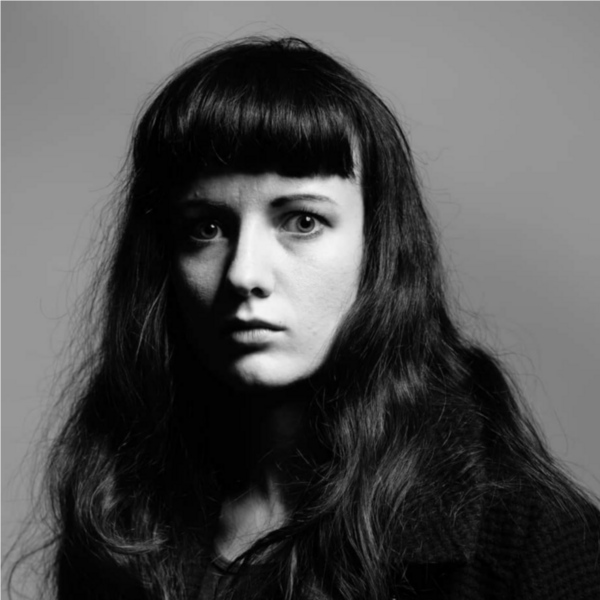
Daryna Gladun is a Ukrainian poet, translator, artist, and researcher from Bucha (born in Khmelnytskyi). She is the author of five poetry collections in Ukrainian. Her poems and short stories have been translated into dozens of languages and published in numerous Ukrainian and International magazines and anthologies. Daryna Gladun is also a curator of Performance School at Creative Youth Seminar (since 2017) and a participant in Performance Studies International (since 2020). Gladun is a laureate of numerous literary contests, a recipient of fellowships from the President of Ukraine, International Writers’ and Translators’ House, and House of Europe, among many other institutions. Gladun’s poetry has been set to music and used in various plays, poetry performances, and art exhibitions worldwide. Czech film director Filip Remunda made a short documentary about Daryna Gladun for his series on contemporary Ukrainian poets ‘Vojna Jedna Báseň.’
Meet the Speaker: Tetiana Grebeniuk

Tetiana Grebeniuk is a doctor of philology and professor. She received her doctorate in 2011 from the Shevchenko Institute of Literature of the National Academy of Sciences of Ukraine, Kyiv, with the thesis “Event in the system of fiction (on the material of Ukrainian prose from the end of the 20th to the beginning of the 21st century)”. She works as a professor at the Department of Cultural and Ukrainian Studies at the Zaporizhzhya State Medical and Pharmaceutical University and as a visiting professor at the Department of Ukrainian Studies at the University of Warsaw. She has taught elective courses at the Ukrainian Free University in Munich and the University of Potsdam, gives educational lectures for a wide audience in Ukraine and abroad, and actively participates in conferences and other academic events. Tetiana Grebeniuk is the author of 135 published works.
Meet the Speaker: Ali Kinsella

Ali Kinsella holds an MA in Slavic studies from Columbia University and has been translating from Ukrainian for thirteen years. With co-translator Devinia Orlowsky, she was a finalist for the 2022 Griffin Poetry Prize, shortlisted for the 2025 PEN Award for Poetry in Translation, and granted a 2024 National Endowment for the Arts fellowship.
Meet the Speaker: Anna Romandash '22 MGA
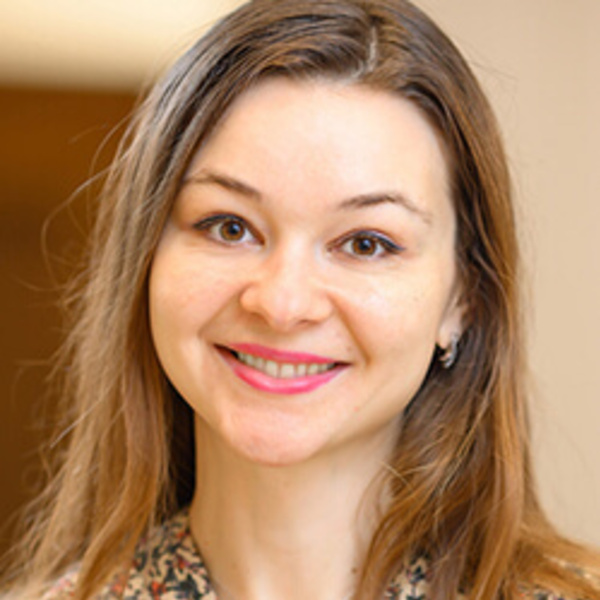
Anna Romandash ’22 MGA is an award-winning journalist from Ukraine and an author of Women of Ukraine: Reportages from the War and Beyond (2023). She was named Media Freedom Ambassador of Ukraine for her human rights and media work and was one of the winners of the European Institute of the Mediterranean literary contest for her reporting. In addition, she is the recipient of awards from Internews, the Council of Europe and the Samovydets Literary Reportage Contest for her work in Ukraine. Romandash works at the intersection of media, technology, and human rights, and is passionate about making technology more inclusive and digitalizing democracy to better the lives of people in developing democracies.