
Culture War: Soft Power, Memory, and Identity in the Fight for Ukraine

In the fight for Ukraine, the front lines extend far beyond the battlefield. A recent Nanovic Institute panel explored the strategic culture war, where symbols, memory, and art are vital tools of national resilience. Discover how Ukraine leverages soft power to define its identity and secure its independent future.
Experience the Event
Presented by The Nanovic Institute for European Studies
In the fight for Ukraine, the front lines extend far beyond the battlefield. A recent Nanovic Institute panel explored the strategic culture war, where symbols, memory, and art are vital tools of national resilience. Discover how Ukraine leverages soft power to define its identity and secure its independent future.
Speakers include:
- Olga Filippova (V.N. Karazin Kharkiv National University): “Ukrainian Forced Migrants in Finnish Memoryscapes: How ‘Immigration into History’ Sparks Reconsideration of the Past and Self-Identity”
- Olena Kovalenko (Ukrainian Institute in Kyiv): “Ukraine’s Wartime Cultural Diplomacy: Between Threats and Hope”
- Khrystyna Kozak (Notre Dame): “Incorporating Memory and Narrative into the Register of Damages for Ukraine (RD4U)”
- Mykola Riabchuk (Institute of Political and Nationalities’ Studies of the Academy of Sciences of Ukraine): “When the Soft Turns Hard: Cancel-Culture Controversy during the Russian-Ukrainian War”
Revolutions of Hope: Resilience and Recovery in Ukraine is a collaboration between Notre Dame’s Nanovic Institute, part of the Keough School of Global Affairs, and Ukrainian Catholic University (UCU). The conference, hosted at the University of Notre Dame in March 2025, focused on the positive and corrective response to this destruction, exploring reasons for hope, sources of hope, and the politics and ethics of hope in Ukraine. How is hope powerful or even revolutionary? How does it encourage resilience and recovery? And, above all, how can we build and promote the integral development of hope in Ukraine? The conference explored the concept, dynamics, and practices of hope through keynote addresses, panel discussions, the arts, and liturgical observances. For more information visit the event website.
Co-sponsors included:
- Department of German, Slavic, and Eurasian Studies
- Kellogg Institute for International Studies
- Kroc Institute for International Peace Studies
- Notre Dame Democracy Initiative
- Notre Dame Global
- Office of the President, University of Notre Dame
- The Program of Creative Writing
- Raclin Murphy Museum of Art
- Ukrainian Catholic University
Meet the Moderator: Ian Kuijt
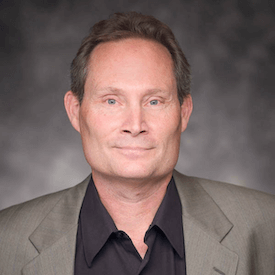
Ian Kuijt is a Professor of Anthropology a the University of Notre Dame. He specializes in the social geography of village life in small-scale prehistoric and historic communities. He earned his B.A. from the University of Lethbridge, M.A. from Simon Fraser University, and Ph.D. from Harvard University. His archaeological research focuses on emerging social inequality, identity, and the construction of community through ritual and economic means, as well as the documentation of cultural heritage sites in combination with oral and visual histories, with fieldwork across Europe, including Ukraine, and North America. Dr. Kuijt has authored or co-edited seven books and over 100 scholarly articles, in addition to several internationally recognized short films.
Meet the Faculty: Olga Filippova

Olga Filippova is an Associate Professor of Sociology at V.N. Karazin Kharkiv National University. Since March 2022, Olga Filippova is also a project researcher at Karelian Institute, University of Eastern Finland. Filippova’s research focuses on politics of identity; people’s perceptions of the reforms in Ukraine; social (re)construction of the past; border studies; cyber-ethnography; drug use and HIV prevention and treatment; and urban food sustainability. The geographical area of her specialization is Ukraine and Transnistria. Recently, her research has focused on issues of forced migration: “home-leaving” and “home-creating,” memory, new solidarities, and cohesion. Her publications have appeared in Europe-Asia Studies; The Journal of Communist Studies and Transition Politics; Journal of American Academy of Religion; Border Studies; Ab Imperio; and The Anthropology of East Europe Review: Central Europe, East Europe and Eurasia. Since 2018, she has been involved in developing the Program on Dialogue and Differences and Conflict Analysis and Resolution at V.N. Karazin Kharkiv National University (together with George Mason University). In 2004-2005 she was a Fulbright scholar at Indiana University.
Meet the Speaker: Olena Kovalenko

Olena Kovalenko is the Head of the Academic and Research Department at The Ukrainian Institute. She holds a Ph.D. in History from the Pontifical University of John Paul II in Krakow (2019), where her dissertation examined Soviet-era guidebooks. Her research specializes in 20th-century cultural history, urban history, and memory studies. Dr. Kovalenko is the author of The Olympic Moscow: A Semiotic Research (2014) and has contributed articles to esteemed journals such as HISTORYKA and Ritualizing the City.
Meet the Speaker: Khrystyna Kozak '25 MGA
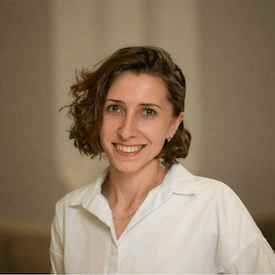
Khrystyna Kozak ’25 MGA currently works as a researcher for the Center for Civilians in Conflict in Ukraine. She is an alumna of the University of Notre Dame’s Master in Global Affairs program and of the Ukrainian Catholic University (UCU) Law School. Since 2019, she has collaborated with various international non-governmental organizations and the United Nations to address the impacts of the Russian war against Ukraine. As part of her education at Notre Dame, she spent six months with the Register of Damages for Ukraine in The Hague. With expertise in law and peace studies, Khrystyna focuses on justice and memory mechanisms that go beyond financial reparations, emphasizing truth-telling and reconciliation to foster lasting peace.
Meet the Speaker: Mykola Riabchuk

Mykola Riabchuk is a Principal Research Fellow at the Institute of Political and Ethnic Studies in Kyiv. He is a prominent author on civil society, state-nation building, nationalism, national identity, and postcommunist transitions in Eastern Europe. His contributions have earned numerous national and international accolades, including the Taras Shevchenko National Prize in Arts and Literature (2022). Among his recent books are Eastern Europe since 1989: Between Loosened Authoritarianism and Unconsolidated Democracy (Warsaw, 2020) and At the Fence of Metternich’s Garden: Essays on Europe, Ukraine, and Europeanization (Stuttgart, 2021). Dr. Riabchuk has also served as a distinguished lecturer at several universities, including Ukrainian Catholic University.