
Qur’an Criticism
What importance do developments in critical scholarship on the Qur’an have for the life of faith? How have Muslims traditionally understood the Qur’an? What were the nineteenth- and twentieth-century beginnings of Western critical scholarship on the Qur’an, and what are its motivating questions today? Where do Western critical scholarship and traditional reading of the Qur’an converge? Do the findings of Western critical scholarship fundamentally challenge traditional Muslim understandings of the Qur’an, and how, more generally, does critical study of the Qur’an affect Muslims’ lives of faith?
Experience the Episode
Presented by College of Arts and Letters
What importance do developments in critical scholarship on the Qur’an have for the life of faith? How have Muslims traditionally understood the Qur’an? What were the nineteenth- and twentieth-century beginnings of Western critical scholarship on the Qur’an, and what are its motivating questions today? Where do Western critical scholarship and traditional reading of the Qur’an converge? Do the findings of Western critical scholarship fundamentally challenge traditional Muslim understandings of the Qur’an, and how, more generally, does critical study of the Qur’an affect Muslims’ lives of faith?
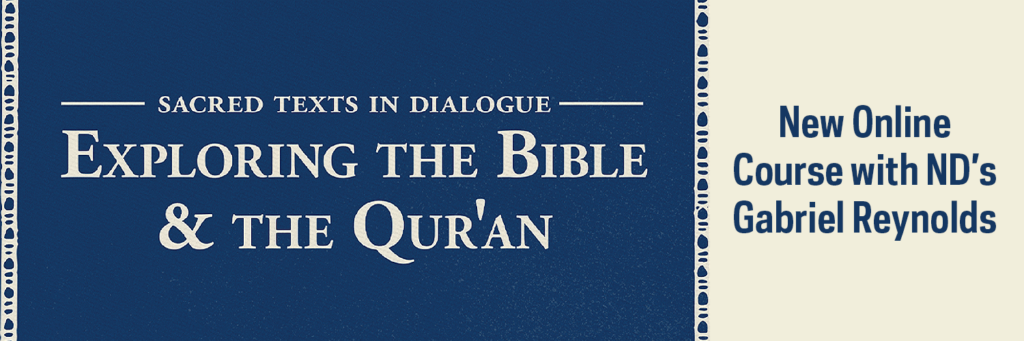
Interested in going even deeper on this topic? Join Professor Said Reynolds for his new online course Sacred Texts in Dialogue, offered through the Coursera platform, to explore the common points, and stark differences, between the Bible and the Qur’an. The course consists of six modules and assumes no previous knowledge of the two books. For more information, click here.
More
Meet the Faculty: Mun’im Sirry
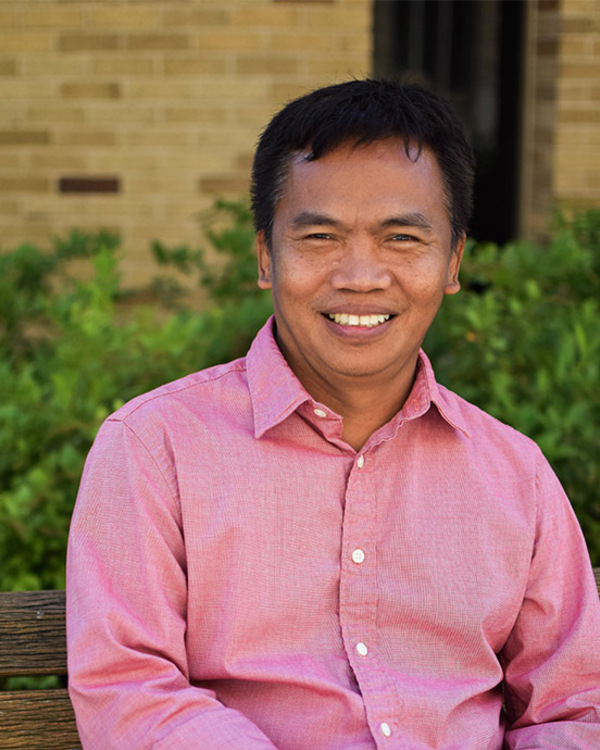
Mun’im Sirry is interested in various aspects of Qur’anic studies. He grew up in Madura (Indonesia) and did his undergrad and graduate studies in Islamic law at the International Islamic University in Islamabad (Pakistan). He then pursued his second Mater’s at UCLA and PhD at the University of Chicago with a dissertation on “Reformist Muslim Approaches to the Polemics of the Qur’an against Other Religions.” He is currently working on key concepts in Qur’anic studies.
Meet the Faculty: Gabriel Said Reynolds
Gabriel Said Reynolds is the Crowley Professor of Islamic Studies and Theology at Notre Dame. He is the author of the Qur’an and the Bible and Allah: God in the Qur’an.
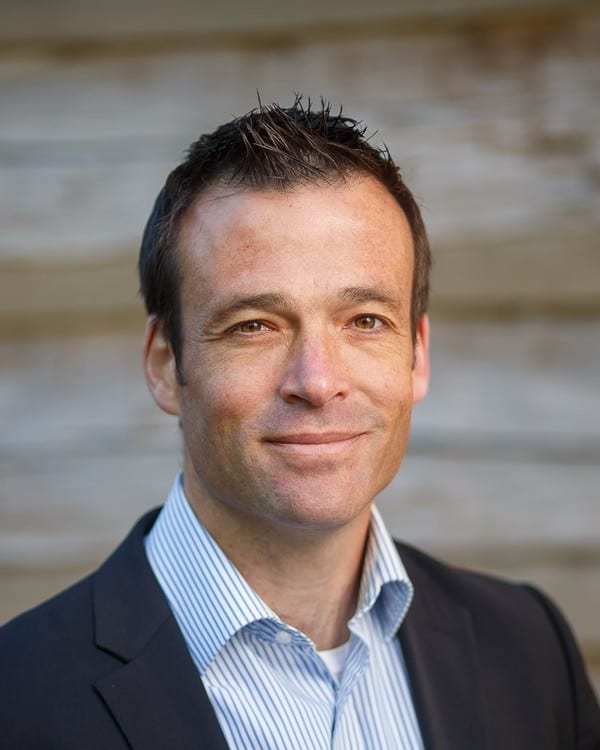
Gabriel Said Reynolds did his doctoral work at Yale University in Islamic Studies. Currently he researches the Qur’ān and Muslim/Christian relations and is Professor of Islamic Studies and Theology in the Department of Theology at Notre Dame. He is the author of The Qur’ān and Its Biblical Subtext (Routledge 2010) and The Emergence of Islam (Fortress, 2012), the translator of ʿAbd al-Jabbar’s Critique of Christian Origins (BYU 2008), and editor of The Qur’ān in Its Historical Context (Routledge 2008) and New Perspectives on the Qur’ān: The Qur’ān in Its Historical Context 2 (Routledge 2011). In 2012-13 Prof. Reynolds directed, along with Mehdi Azaiez, “The Qurʾān Seminar,” a year-long collaborative project dedicated to encouraging dialogue among scholars of the Qurʾān, the acts of which appeared as The Qurʾān Seminar Commentary (De Gruyter, 2016). At Notre Dame he teaches courses on theology, Muslim/Christian Relations, and Islamic Origins. He is also a regular contributor to Notre Dame’s World Religions World Church podcast: Minding Scripture.