

Creating Economic Mobility Through Public Transit

For families facing impossible choices between a doctor’s visit and a job interview, transportation costs can be a breaking point. Discover how King County, WA, and University of Notre Dame researchers used rigorous evidence to test a solution: free transit. The results reveal transformative impacts on community well-being, charting a new course for equitable mobility.
Experience the Episode
For families facing impossible choices between a doctor’s visit and a job interview, transportation costs can be a breaking point. Discover how King County, WA, and University of Notre Dame researchers used rigorous evidence to test a solution: free transit. The results reveal transformative impacts on community well-being, charting a new course for equitable mobility.
Featured Speakers:
- David Phillips, Research Professor of Economics, LEO
- Matthew Freedman, University of California at Irvine
- Truong Hoang, State of Washington Department of Social and Health Services
- Maria Jimenez-Zepeda, King County Metro
Partner with LEO
The Evidence Matters series is sponsored on ThinkND by the Wilson Sheehan Lab for Economic Opportunities (LEO). Poverty is stubborn and requires the utmost collaboration of thought and action to drive change. People of goodwill must bring their unique strengths and positions together to solve this problem. At LEO, we believe knowledge has to be combined with action. But poverty can’t be solved by just one person, or even one sector. That’s why we bring together innovative social service provider partners, top-tier academics, philanthropists, policymakers, and others to tackle poverty.
Change is possible. And with your action, we can get one step closer to reducing poverty in our country, together.
Your job is to act. What will you do?
For more information, please visit LEO’s website.
MoreMeet the Speaker: Matthew Freedman
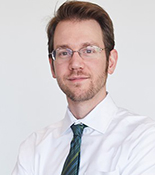
Matthew Freedman is a Dean’s Professor in the Department of Economics at the University of California, Irvine. He is also a co-editor at Regional Science and Urban Economics. His primary research interests are in urban economics, public finance, and labor economics. His work has also addressed topics in environmental economics and the economics of crime. He received his Ph.D. in economics from the University of Maryland-College Park.
For the 2025-26 academic year, Matthew Freedman is a Visiting Professor in the Centre for Economic Performance at the London School of Economics and Political Science. He is also an affiliated researcher with Notre Dame’s Wilson Sheehan Lab for Economic Opportunities.
Meet the Speaker: Truong Hoang
Truong Hoang has worked for the Department of Social and Health Services for 19 years, having started on the front lines as a Public Benefits Specialist in Community Services Division’s Contact Center. He has extensive experience with DSHS internal systems having worked on numerous workgroups. He has experience in both policy and procedures having been a Financial Coordinator, the Administrator for several Community Services Offices, and the Deputy Regional Administrator for Region 2 consisting of 17 offices. He is currently a Deputy Regional Administrator.
Meet the Speaker: Maria Jimenez-Zepeda
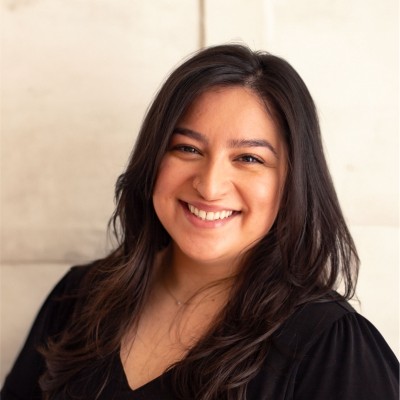
Maria Jimenez-Zepeda is a project/program manager with the Safety Emphasis Program at King County Metro Transit, and served as a leader in the ORCA Reduced Fare Program with King County Metro. She previously worked as the Immigrant and Refugee Commissioner for the City of Seattle. She has a Bachelor’s in Psychology from Yale University and an MPA from the Evans School of Public Policy & Governance at the University of Washington.
Meet the Faculty: David Phillips

As research faculty, David Phillips is a professor who conducts LEO research full-time. He collaborates with service providers to measure the differences their services make in the lives of their clients and in the fight against poverty. For each project, David leads the academic side of the partnership and helps design the research evaluation, implement it, and analyze the data. He received his BA in Economics and Mathematics from Butler University and his PhD in Economics from Georgetown University. David specializes in housing, criminal justice, transportation, and low-wage labor market research.