
Teaching Peace in Active and Post-Conflict Zones

George Lopez talks with three other scholar-practitioners about how to teach peace studies in areas where there is active conflict or where conflict has just ended. This episode’s guests include Professor of the Practice and Director of the Peace Accords Matrix (PAM) Josefina Echavarría Alvarez, Fr. Elias Omondi Opongo, Director of the Centre for Research Training and Publication at the Institute for Peace Studies and International Relations, and Fr. Matthew Pagan, Vice-Chancellor of the Catholic University of South Sudan.
Experience the Episode
Meet the Faculty: George A. Lopez
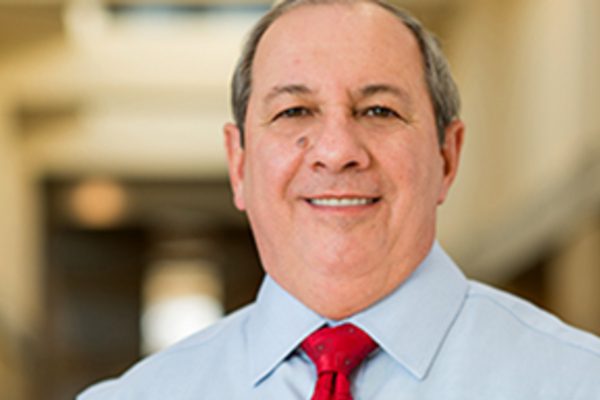
George A. Lopez is the Rev. Theodore M. Hesburgh, C.S.C., Professor Emeritus of Peace Studies at the Kroc Institute for International Peace Studies, where he was a founding faculty member. He is a leading expert on economic sanctions, peacebuilding, and various peace-related issues. As a logical extension of his teaching and research with the Kroc Institute, Lopez has engaged in a diverse set of policy and public roles. He served as interim executive director of the Bulletin of the Atomic Scientists in 1997 and chaired its Board of Directors (1998-2003), presiding over changing the hands of the Doomsday Clock in 2002. As a senior research associate at the Carnegie Council on Ethics and International Affairs in New York City from 2001-2002, he assisted with the Council’s post-9/11 public programming throughout the U.S. From 2013-15, he was the Vice President of the Academy for International Conflict Management and Peacebuilding at the United States Institute of Peace (USIP) in Washington, D.C.
Since 1992, Lopez has advised the United Nations, various international agencies, and governments on economic sanctions issues, ranging from the design of targeted financial sanctions to redressing their negative humanitarian impacts. He has written more than 40 articles and book chapters and authored or edited six books (often with Kroc Institute faculty member David Cortright) on sanctions. Lopez and Cortright’s research detailing the unlikely presence of weapons of mass destruction in Iraq was published before the 2003 Iraq War as “Disarming Iraq” in Arms Control Today and after the war as “Containing Iraq: the Sanctions Worked” in Foreign Affairs. In 2010-11 and again in 2022-23 Lopez served on the UN Panel of Experts (1874) for monitoring sanctions on North Korea. In 2022 he co-founded https://ahsrproject.org to address the negative impact of economic sanctions on innocent populations.
Meet the Faculty: Josefina Echavarría Álvarez
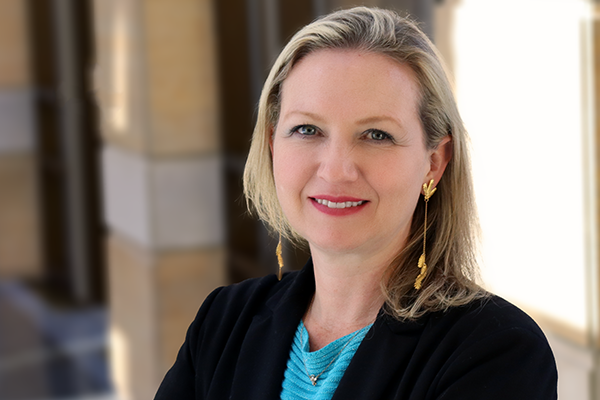
Josefina Echavarría Álvarez is professor of the practice and the director of the Peace Accords Matrix (PAM) program at the Kroc Institute for International Peace Studies, part of the Keough School of Global Affairs. Josefina is also a faculty fellow of the Pulte Institute for Global Development.
As the director of PAM, she leads PAM’s researchers, faculty and staff in the South Bend campus, as well as PAM’s field units that carry out official monitoring of the implementation of peace accords in real time. In Colombia, PAM’s Barometer Initiative carries out official monitoring of the entire 2016 Final Peace Agreement between the Colombian government and the former FARC-EP guerrillas. In the Philippines, in partnership with Catholic Relief Services (CRS) Philippines, PAM-Mindanao provides monitoring methodology and technical assistance to measure the progress of the Normalization Annex of the 2014 agreement between the Government of the Philippines and the Moro Islamic Liberation Front (MILF).
Josefina also directs the Legacy Project for “Preserving and Engaging the Digital Archive of the Colombian Truth Commission”, which guarantees continued access to more than 200,000 files including audiovisual, non-textual knowledge and digitized documents compiled by the Colombian Truth Commission. By focusing on developing new teaching materials, harnessing the lessons and best practices for policy impact and supporting innovative academic research and peacebuilding practice, Josefina works towards advancing transitional justice, human rights and the centrality of victims in peace processes.
She was previously co-director of the Research Center for Peace and Conflict at the University of Innsbruck and a Fellow at the University of Cambridge (United Kingdom) and Trinity College (Ireland). She has been a guest lecturer at numerous universities around the world on peacebuilding, peace education, gender, conflict analysis, and research methods. She has also managed diverse international cooperation projects in the fields of gender, citizenship, and curricular development for peace and conflict studies. Josefina earned her Ph.D. in Peace, Conflict, and Democracy from the Jaume I University (Spain), an M.A. in Peace, Development, Security and International Conflict Transformation from the University of Innsbruck (Austria), and a B.A. in Government and International Relations from the University Externado (Colombia).
Meet the Speaker: Dr. Elias Omondi Opongo '04 M.A.
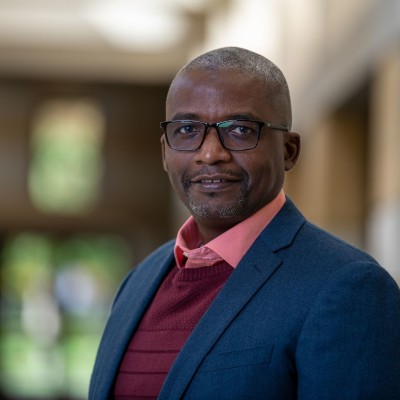
Dr. Elias Omondi Opongo, S.J., ’04 M.A., a Jesuit priest, is the Director of the Centre for Research Training and Publication at the Institute for Peace Studies and International Relations at Hekima University college. Elias holds a Ph.D. in Peace and Conflict Studies from University of Bradford, UK and M.A. in International Peace Studies from University of Notre Dame. His research focus is in the areas of transitional justice and post conflict reconstruction, state building and community peacebuilding. He has published books, book chapters and articles including, among others, books titled: (2006) Making Choices for Peace: Aid Agencies in Field Diplomacy; (2007) Faith Doing Justice: A Manual for Social Analysis, Catholic Social Teaching and Social Justice; (2008) Peace Weavers: Methodologies of Peacebuilding in Africa; (2014) Catholic Leadership in Peacebuilding in Africa.
Meet the Speaker: Fr. Matthew Pagan
Father Mathew Pagan was the Vice-Chancellor of the Catholic University of South Sudan in Juba, until September 2025. He holds a doctorate in canon law from Urbaniana University in Rome.