
Understanding the Madrasa Discourses Project
Faculty members associated with the Madrasa Discourses project at the Kroc Institute discuss the program's unique efforts to engage madrasa scholars in conversations about religion, society and epistemology. Joshua Lupo, Madrasa Discourses classroom coordinator, moderates a conversation with Ebrahim Moosa, primary investigator for Madrasa Discourses, Mahan Mirza, Madrasa Discourses Advisor, Waris Mazhari, faculty member in India, and Ammar Khan Nasir, faculty member in Pakistan. The Madrasa Discourses project is part of the Contending Modernities initiative, which is a joint effort of the Kroc Institute and the Keough School of Global Affairs.
Experience the Episode
Meet the Speaker: Josh Lupo
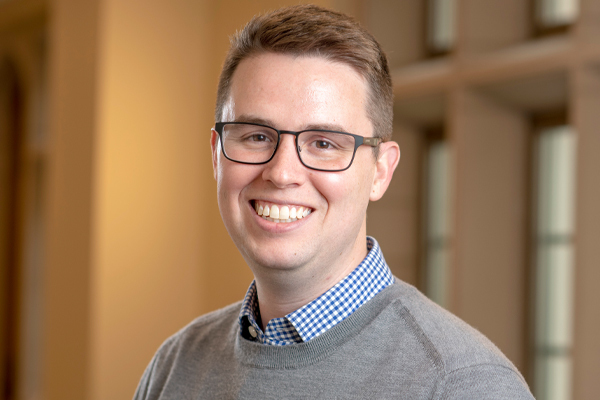
Josh Lupo is the assistant director of the Contending Modernities program. Josh received his Ph.D. in 2018 from Florida State University’s Department of Religion. His research interests include theory and method in the study of religion, philosophies both in and of monotheistic traditions, and political theory. His dissertation, “After Essentialism,” analyzed how phenomenologists of religion in the first half of the twentieth century appropriated—and misunderstood—classical philosophical phenomenology, and argued that Heidegger’s existential phenomenology was a model for scholarly critique in the contemporary study of religion. He has published articles and reviews in Soundings, Reading Religion, Sophia, and Religious Studies Review.
Meet the Faculty: Ebrahim Moosa
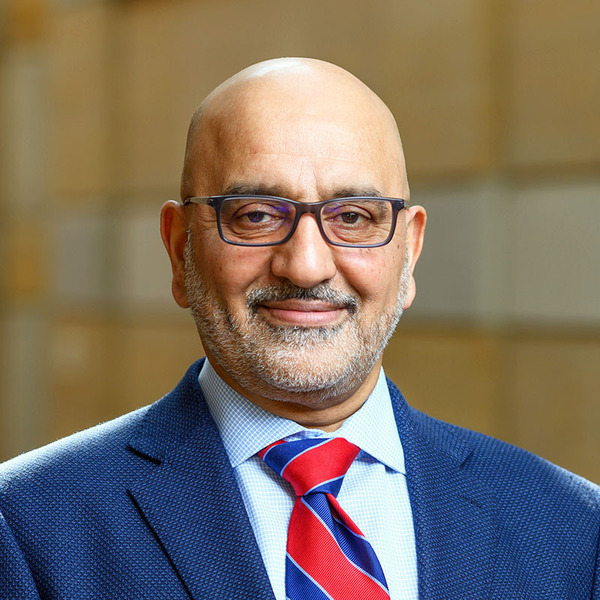
Ebrahim Moosa (PhD, University of Cape Town 1995) is Mirza Family Professor of Islamic Thought and Muslim Societies in the Keough School of Global Affairs at the University of Notre Dame. He co-directs, with Scott Appleby and Atalia Omer, Contending Modernities, the global research and education initiative examining the interaction among Catholic, Muslim, and other religious and secular forces in the world. He is a faculty fellow of the Keough School’s Liu Institute for Asia and Asian Studies.
Moosa’s interests span both classical and modern Islamic thought with a special focus on Islamic law, history, ethics and theology. He is the author of Ghazali and the Poetics of Imagination, winner of the American Academy of Religion’s Best First Book in the History of Religions (2006) and editor of the last manuscript of the late Professor Fazlur Rahman, Revival and Reform in Islam: A Study of Islamic Fundamentalism.
Meet the Faculty: Mahan Mirza

Mahan Mirza serves as executive director of the Rafat and Zoreen Ansari Institute for Global Engagement with Religion in the Keough School of Global Affairs at the University of Notre Dame. An Islamic studies scholar and expert on religious literacy, Mirza brings extensive pedagogical and administrative experience to his role, including serving as dean of faculty at Zaytuna College in Berkeley, California, America’s first accredited Muslim liberal arts college.
Immediately before his appointment to the Ansari Institute, Mirza served as the lead faculty member for Notre Dame’s Madrasa Discourses project, which equips Islamic religious leaders in India and Pakistan with the tools to confidently engage with pluralism, modern science, and new philosophies.
Meet the Faculty: Dr. Waris Mazhari
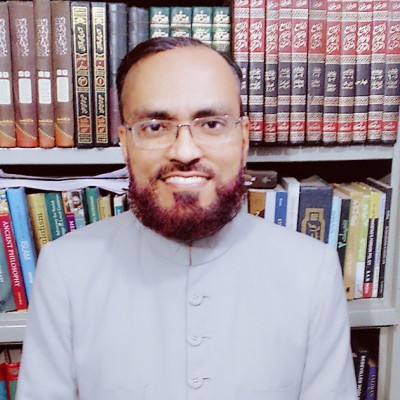
Dr. Waris Mazhari PhD (Jamia Millia Islamia, 2013) is presently an assistant professor at Jamia Hamdard in New Delhi. For the past fifteen years, he has been with the Darul Uloom Deoband Old Boys Organization as an editor of its Urdu monthly journal Tarjuman-e- Darul Uloom. Dr. Mazhari served as Research Associate for Virtual Dialogues, an initiative at Duke University in North Carolina, USA, from August 2011 to July 2013. The monthly magazine Communalism Combat dedicated a special issue to his writings on peace, non-violence, and interfaith dialogue, under the theme Rediscovering the Tolerant Tradition in Islam in May, 2010. Dr. Mazhari is a prolific writer with countless articles and multiple books under his name. Among these is Hindustani Madaris ka talimi nizam aur us men islah ki zarurat: aik jaiza, a work that discusses the need for reform in the madrasa curriculum, published in Urdu in 2014. His chief interests are in the areas of interfaith dialogue, peace and social harmony, the reconstruction of religious thought in Islam, and reform in Indian madrasas. Many of his articles have been translated into other languages.
Born in a middle class family in a small village, Dr. Mazhari grew up in rural India away from urban centers of cosmopolitanism, development, and technology. He lost his parents in infancy, received little formal education in his formative years, and was employed as a child laborer on a farm. He eventually received basic religious education from a local madrasa where he memorized the entire Qur’an. However, by the age of sixteen he had completed the prerequisites to formally join a madrasa, enrolling in the renowned Darul Uloom Deoband. Graduating with the Fazilat degree (equivalent to graduate level work) in the year 1995, Dr. Mazhari advanced to Jamia Millia Islamia, New Delhi, graduated in 2005, and received a master’s degree in 2008 in Islamic Studies. He completed his PhD in 2013 from the same university.
Meet the Faculty: Dr. Muhammad Ammar Khan Nasir

Dr. Muhammad Ammar Khan Nasir is Director Undergraduate Program of Islamic Studies at GIFT University, Pakistan. He edits the monthly Islamic magazine, Al-Sharia and is also engaged in various research projects with Al-Mawrid Institute of Islamic Sciences, Lahore and Iqbal International Center for Research and Dialogue, IIU, Islamabad.
Dr. Ammar Khan Nasir received his PhD in Islamic Studies from the University of Punjab, Lahore. He did his MPhil in Islamic Studies from GIFT University, Gujranwala where he received a gold medal and the certificate of honor for distinguished academic performance. He completed his training as a scholar of traditional Islamic sciences at Madrasa Nusrat al-Uloom Gujranwala and obtained Master’s Degree in English Literature from the University of the Punjab.