
Peace Policy Spotlight: The Power of Art in Peacebuilding

Art has long been a powerful tool for fostering understanding, reconciliation, and healing in conflict-affected societies. By transforming cultural, political, and ideological boundaries, artistic expression allows individuals to communicate, reflect, and envision new possibilities for coexistence. In this episode, Peace Policy guest editor Norbert Koppensteiner, associate teaching professor of peace studies, joined the contributors of the issue to discuss the diverse ways that art contributes to peacebuilding, demonstrating its ability to cultivate empathy, challenge oppressive structures, and create spaces for dialogue. Contributors to this issue of Peace Policy include Alison Ribeiro de Menezes, a professor of hispanic studies at the University of Warwick, UK; Vera Brandner, head of the NGO ipsum and a freelance scientist and lecturer; Jessica (Doe) Mehta, Ph.D. (Aniyunwiya/Cherokee Nation), a 2024-2025 visiting research fellow at the Kroc Institute; and Paula Ditzel Facci, a dancing peace researcher and assistant professor of peacebuilding at the Center for Justice and Peacebuilding at Eastern Mennonite University.Read all articles in this issue at peacepolicy.nd.edu.
Experience the Episode
Presented by Kroc Institute for International Peace Studies
Art has long been a powerful tool for fostering understanding, reconciliation, and healing in conflict-affected societies. By transforming cultural, political, and ideological boundaries, artistic expression allows individuals to communicate, reflect, and envision new possibilities for coexistence.
In this episode, Peace Policy guest editor Norbert Koppensteiner, associate teaching professor of peace studies, joined the contributors of the issue to discuss the diverse ways that art contributes to peacebuilding, demonstrating its ability to cultivate empathy, challenge oppressive structures, and create spaces for dialogue.
Contributors to this issue of Peace Policy include Alison Ribeiro de Menezes, a professor of hispanic studies at the University of Warwick, UK; Vera Brandner, head of the NGO ipsum and a freelance scientist and lecturer; Jessica (Doe) Mehta, Ph.D. (Aniyunwiya/Cherokee Nation), a 2024-2025 visiting research fellow at the Kroc Institute; and Paula Ditzel Facci, a dancing peace researcher and assistant professor of peacebuilding at the Center for Justice and Peacebuilding at Eastern Mennonite University.Read all articles in this issue at peacepolicy.nd.edu.
This episode was originally published by the Kroc Institute for International Peace Studies on May 13, 2025. To explore the entire library of Kroc Cast podcast episodes and for more information , please visit kroc.nd.edu.
MoreMeet the Faculty: Norbert Koppensteiner
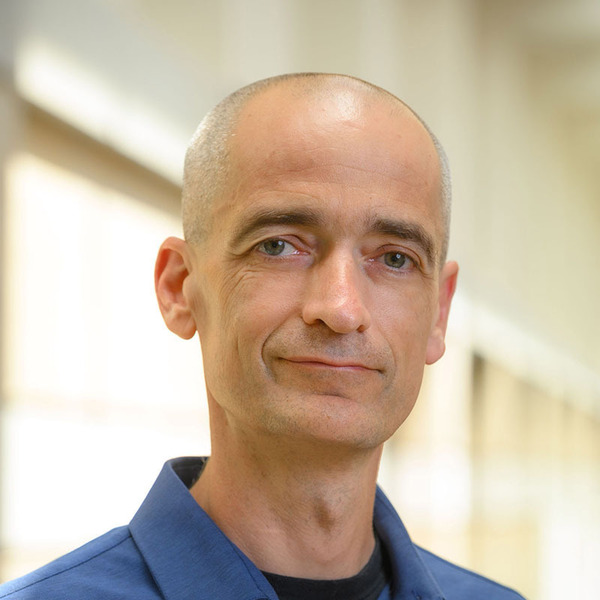
Norbert Koppensteiner is associate teaching professor of peace studies in the Keough School of Global Affairs at the University of Notre Dame. He also is the director of the international peace studies major for the Master of Global Affairs program.
Prior to joining the Keough School’s core faculty, Koppensteiner spent two years as a visiting research fellow at the Keough School’s Kroc Institute for International Peace Studies, where he advanced two lines of research: he explored the art of facilitation for peace and transforming conflicts, with a special focus on embodied approaches, and combined this with methodological and epistemological research into comprehensive ways of knowing. Before coming to Notre Dame, Koppensteiner was the program coordinator for the MA program for peace studies at the University of Innsbruck and senior lecturer at the same university. He has taught extensively as a guest lecturer in peace studies around the globe and as a freelance facilitator for embodied practices of conflict transformation with a special emphasis on dance, theater and breath. Koppensteiner earned his PhD at the European Graduate School in Saas Fee, (Switzerland) in 2009, an MA in peace studies from the University of Innsbruck (Austria), and a MPhil in political science from the University of Innsbruck (Austria). He is the author of two monographies: Transrational Peace Research and Elicitive Facilitation (2020) and The Art of the Transpersonal Self (2009), as well as the co-editor of the Palgrave International Handbook of Peace Studies: A Cultural Perspective (2011, 2014). His current teaching, research and facilitation focus on embodied and integral practices of conflict transformation and qualitative peace research methodologies.
Meet the Faculty: Alison Ribeiro de Menezes
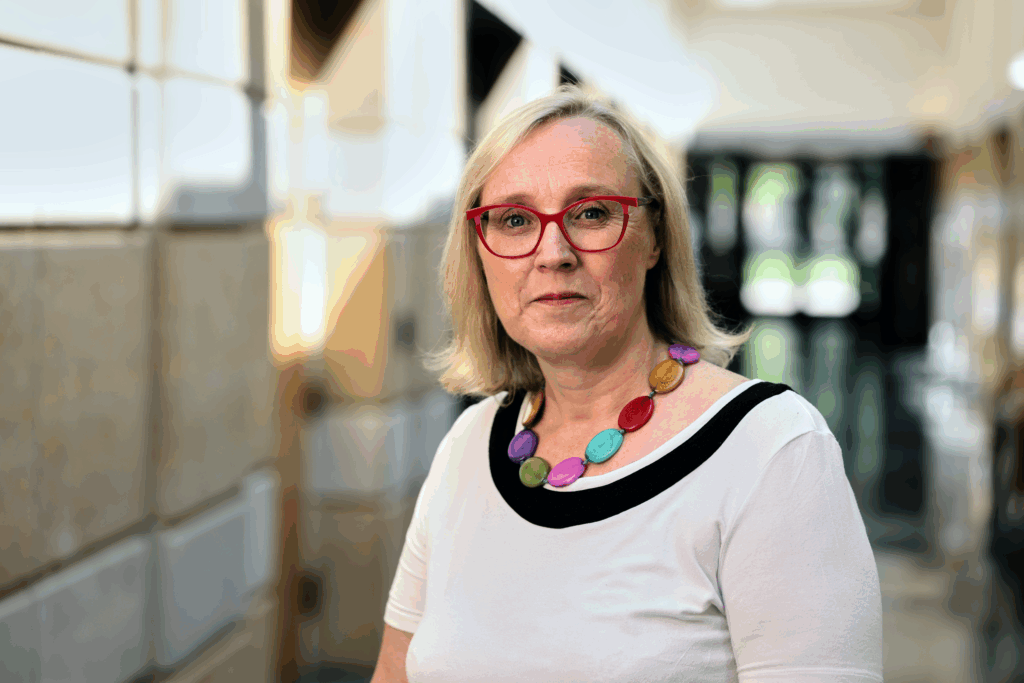
Alison Ribeiro de Menezes is a Hispanist with particular interests in literature and film, and in the relationship between history, memory, and culture in various regions of the Hispanic world. She read Spanish and French at St Anne’s College, Oxford, completing a DPhil in Spanish in 1997. From 1995 to 2012 she lectured in the Department of Spanish at University College Dublin. She moved to Warwick in 2012 to lead the establishment of the new Hispanic Studies department, of which she was Head until 2015. In 2014-15 she was Deputy Chair of the Faculty of Arts and in 2016-19, and she was Head of the School of Modern Languages and Cultures. She has also served on Senate and has sat on several university-level committees, including ARC and Research Committee. She has returned to the role of Deputy Chair of the Faculty of Arts, with responsibility for Research.
Alison specializes in modern Hispanic literatures and cultures, but also has interests in Portuguese narrative and film, and her early research focused on the contemporary reception of Golden-Age works. She has held visiting positions at the Centre for Comparative Study, University of Lisbon; the School of Advanced Study, University of London; Brown University, Rhode Island; and the University of Notre Dame, Indiana. Her research has attracted awards from the Irish Research Council, the European Union, the Leverhulme Trust, the Arts and Humanities Research Council, and the Canadian Social Sciences and Humanities Research Council.
Meet the Speaker: Vera Brandner
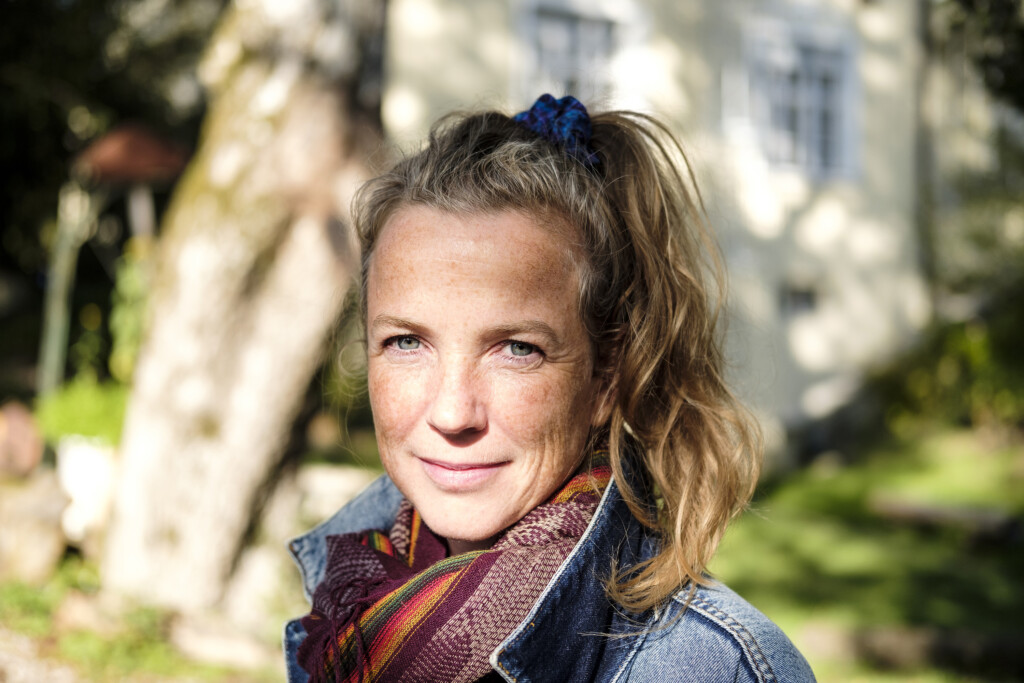
Vera Brandner designs and implements international projects in the field of transcultural education and conflict transformation. She studied international development and photography in Vienna and holds a PhD in sustainability science from Leuphana University Lüneburg. Her expertise lies in the development of transcultural and transdisciplinary methods and methodologies. Thematically, her fields of work are education, conflict transformation and development cooperation. Currently she is working for the ipsum project “InterViews” in cooperation with Caritas St. Pölten and Faces Pakistan as well as for the project “FoodAlternatives” at the Institute of Sociology in Innsbruck.
Meet the Fellow: Jessica Doe

Jessica Doe (née Mehta, Tyner) (Kroc Institute for International Peace Studies Visiting Research Fellow for Academic Year 2024-25) is an Aniyunwiya inter/multi/anti-disciplinary poet, artist, and scholar born on the northwest region of Turtle Island, a term used by some American indigenous people for North America (also known as Oregon in the United States). As a citizen of the Cherokee Nation, space, place, and Indigenization are driving forces in her work, which has been described as avant-garde conceptualism. Jessica’s doctoral research focused on the intersection of female poetry and eating disorders with an emphasis on Sylvia Plath. She is currently working on a monograph that expands to include modern/contemporary Indigenous/Indigiqueer poetics. As a Fulbright Senior Scholar in Bengaluru, India, she curated an anthology of contemporary Indian poetry written in the colonizer’s tongue. Jessica has authored poetry collections, novels, and short story collections. She has also enjoyed exhibitions around the globe, most recently at Don Dexter Gallery in Eugene, Oregon. Learn more at www.thischerokeerose.com.
Meet the Faculty: Paula Ditzel Facci

Paula Ditzel Facci serves as assistant professor of peacebuilding at the Center for Justice and Peacebuilding at EMU. She holds a PhD in Peace and Conflict Studies from the University Jaume I (Spain). She was a visiting research fellow at the Kroc Institute for International Peace Studies, University of Notre Dame, and a visiting scholar at CJP, EMU (USA).
Paula has taught at the Unit for Peace and Conflict Studies, University of Innsbruck (Austria), the Academy for Conflict Transformation (Germany), and the Instituto Paz e Mente (Brazil). She has also facilitated workshops on creative approaches for conflict transformation with focus on dance and movement for students, peacebuilders and communities.
Paula is the author of Dancing Conflicts, Unfolding Peaces (2020), and On Human Potential: Peace and Conflict Transformation Fostered Through Dance (2011). She published a Practitioner’s Toolkit: Gender in Peace and Conflict (2020), and co-edited the special issue “Transrational Perspectives in Peace Education”, of the Journal of Peace Education (2019). She authored chapters in culture of peace for educators and youth and worked as a consultant in Reports on Human Rights Education of the InterAmerican Institute of Human Rights, Costa Rica. Previously, Paula worked for five years with social and educational projects in Brazil, her native country.