
Preserving Voices, Confronting Violence: Insights from the Legacy Project

Josefina Echavarría Álvarez, director of the Peace Accords Matrix and the Legacy Project at the Kroc Institute, part of the Keough School of Global Affairs, explores the power of Colombia’s Truth Commission Transmedia Platform and its relevance for peacebuilding worldwide. The conversation highlights how this innovative, multimedia archive preserves multiple voices and lived experiences of Colombia’s armed conflict while offering insights for societies grappling with the legacies of violence. Joining the discussion are two distinguished scholars working with the Legacy Project: Leigh Payne, professor of sociology and latin america at the University of Oxford, whose extensive research on transitional justice spans Latin America and beyond, and Emma Murphy, postdoctoral researcher at the Keough-Naughton Institute and the Kroc Institute, whose work develops the concept of agonistic transitional justice as an alternative to liberal approaches. Together, they reflect on the possibilities and challenges of memory, contestation, and multiplicity in processes of truth-telling and reconciliation.
Experience the Episode
Presented by Kroc Institute for International Peace Studies
Josefina Echavarría Álvarez, director of the Peace Accords Matrix and the Legacy Project at the Kroc Institute, part of the Keough School of Global Affairs, explores the power of Colombia’s Truth Commission Transmedia Platform and its relevance for peacebuilding worldwide. The conversation highlights how this innovative, multimedia archive preserves multiple voices and lived experiences of Colombia’s armed conflict while offering insights for societies grappling with the legacies of violence.
Joining the discussion are two distinguished scholars working with the Legacy Project: Leigh Payne, professor of sociology and latin america at the University of Oxford, whose extensive research on transitional justice spans Latin America and beyond, and Emma Murphy, postdoctoral researcher at the Keough-Naughton Institute and the Kroc Institute, whose work develops the concept of agonistic transitional justice as an alternative to liberal approaches. Together, they reflect on the possibilities and challenges of memory, contestation, and multiplicity in processes of truth-telling and reconciliation.
This episode was originally published by the Kroc Institute for International Peace Studies on September 8, 2025. To explore the entire library of Kroc Cast podcast episodes and for more information , please visit kroc.nd.edu.
MoreMeet the Faculty: Josefina Echavarría Álvarez
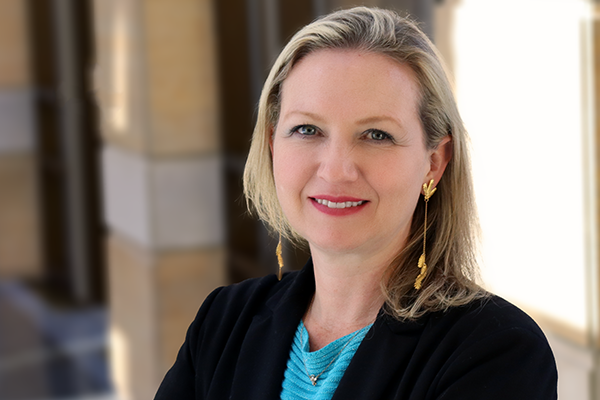
Josefina Echavarría Álvarez is professor of the practice and the director of the Peace Accords Matrix (PAM) program at the Kroc Institute for International Peace Studies, part of the Keough School of Global Affairs. Josefina is also a faculty fellow of the Pulte Institute for Global Development.
As the director of PAM, she leads PAM’s researchers, faculty and staff in the South Bend campus, as well as PAM’s field units that carry out official monitoring of the implementation of peace accords in real time. In Colombia, PAM’s Barometer Initiative carries out official monitoring of the entire 2016 Final Peace Agreement between the Colombian government and the former FARC-EP guerrillas. In the Philippines, in partnership with Catholic Relief Services (CRS) Philippines, PAM-Mindanao provides monitoring methodology and technical assistance to measure the progress of the Normalization Annex of the 2014 agreement between the Government of the Philippines and the Moro Islamic Liberation Front (MILF).
Josefina also directs the Legacy Project for “Preserving and Engaging the Digital Archive of the Colombian Truth Commission”, which guarantees continued access to more than 200,000 files including audiovisual, non-textual knowledge and digitized documents compiled by the Colombian Truth Commission. By focusing on developing new teaching materials, harnessing the lessons and best practices for policy impact and supporting innovative academic research and peacebuilding practice, Josefina works towards advancing transitional justice, human rights and the centrality of victims in peace processes.
She was previously co-director of the Research Center for Peace and Conflict at the University of Innsbruck and a Fellow at the University of Cambridge (United Kingdom) and Trinity College (Ireland). She has been a guest lecturer at numerous universities around the world on peacebuilding, peace education, gender, conflict analysis, and research methods. She has also managed diverse international cooperation projects in the fields of gender, citizenship, and curricular development for peace and conflict studies. Josefina earned her Ph.D. in Peace, Conflict, and Democracy from the Jaume I University (Spain), an M.A. in Peace, Development, Security and International Conflict Transformation from the University of Innsbruck (Austria), and a B.A. in Government and International Relations from the University Externado (Colombia).
Meet the Faculty: Leigh Payne
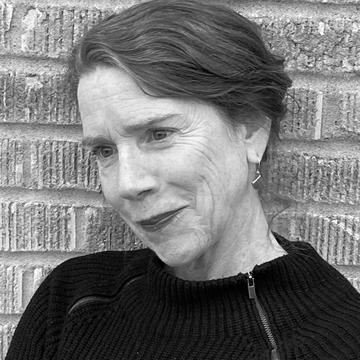
Leigh A. Payne is professor of sociology and latin america at St Antony’s College, University of Oxford. She is the author of a number of books, book chapters, and articles on transitional justice.
Among her publications in the last five years are: Confessions to Intimate Violence: FARC Confessions to Sexual Violations in the Colombian Conflict (2024); The Right against Rights in Latin America (2023); Understanding Collaborators (2022); Disappearances in the Post-Transition Era in Latin America (2021); and Transitional Justice and Corporate Accountability from Below: Deploying Archimedes’ Lever (2021). She is also the co-author of Transitional Justice in Balance and the co-editor of Amnesty in the Age of Human Rights Accountability.
Based on her research findings, Payne has been involved in numerous academic-practitioner impact projects around the world. For her academic research and policy impact work, she has received grants from foundations including Open Society, Ford, Oak, Newton, and Zennström. She has also received funding from research councils, including the Economic and Social Research Council (UK), Arts and Humanities Research Council (UK), British Academy, and National Science Foundation (US)
Meet the Speaker: Emma Murphy
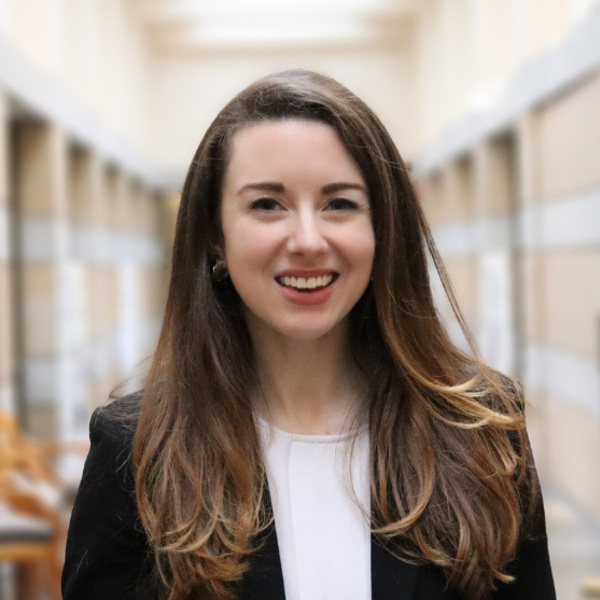
Dr. Emma Murphy is a postdoctoral research associate with the Clingen Family Center for the Study of Modern Ireland and the Peace Accords Matrix in the Kroc Institute. Her current project supports the Legacy Project, which preserves and engages the digital archive of the Colombian Truth Commission to understand the lessons the Colombian peace process holds for Ireland.
Murphy earned her doctorate in politics and international relations from University College Dublin, where she was an Irish Research Council Laureate Award-affiliated fellow. Her doctoral research focused on identifying and understanding an alternative to liberal approaches in transitional justice design in Colombia, Northern Ireland, and Uganda. This alternative, agonistic transitional justice, centers on creating avenues within transitional justice institutions for engaging in contestation and encouraging multiplicity rather than focusing on consensus in the post-conflict space. She holds a Master of Philosophy in politics and international relations from the University of Cambridge and a Bachelor of Arts in politics and East Asian studies from Mount Holyoke College.
Her work has been published in Third World Quarterly, Cooperation and Conflict, and Peacebuilding. Her most recent article, “Gender as an Analytic Lens for Agonistic Peace: Insights from Colombia’s Truth Commission,” uses the case of the Colombian Truth Commission to argue for the necessity of including a focus on gender in agonistic transitional justice design. She is currently developing a book proposal based on her doctoral research into agonistic transitional justice. Murphy has presented her work at a variety of international conferences, including the International Studies Association Annual Convention, the European Consortium for Political Research General Conference, and the Conflict Research Society Annual Conference. She previously served as a teaching fellow at University College Dublin, where she taught courses on egalitarian theory and transitional justice.