
Yarning with Indigenous Traditions
In an era of compounding global crises, our speakers offer a strategic intervention: a move beyond the transactional toward the relational. This dialogue interrogates the “myth of progress,” dismantles the currency of academic perfection, and retrieves custodial responsibility through the protocols of “Embassy.” Dr. Tyson Yunkaporta, Dr. Ashlee Bird, and Dr. Sousan Abadian examine how Indigenous wisdom provides essential checks on the malignant narcissism driving modern global disconnection and institutional failure.
Experience the Event
In an era of compounding global crises, our speakers offer a strategic intervention: a move beyond the transactional toward the relational. This dialogue interrogates the “myth of progress,” dismantles the currency of academic perfection, and retrieves custodial responsibility through the protocols of “Embassy.” Dr. Tyson Yunkaporta, Dr. Ashlee Bird, and Dr. Sousan Abadian examine how Indigenous wisdom provides essential checks on the malignant narcissism driving modern global disconnection and institutional failure.
This event was recorded on October 2, 2022 at the inaugural Nasr Book Prize Symposium hosted by the Ansari Institute for Global Engagement with Religion at the University of Notre Dame. For more information on the award, now known as the Book Prize on Religion and the World, please visit the Ansari Institute website.
Indigenous Voices is co-sponsored on ThinkND by the Ansari Institute for Global Engagement with Religion, Kroc Institute for International Peace Studies, the Initiative on Race and Resilience, the Raclin Murphy Museum of Art, the College of Arts & Letters Native American Initiatives, and the Native American Alumni of Notre Dame.
MoreMeet the Faculty: Dr. Ashlee Bird
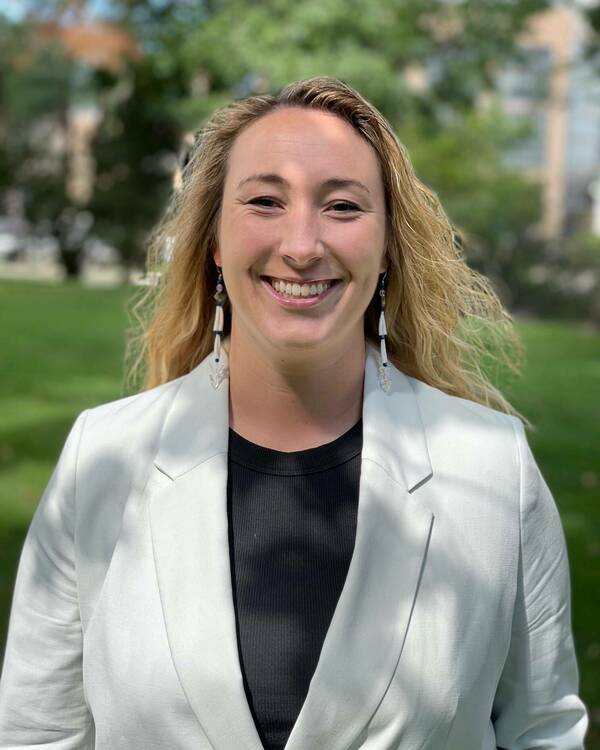
Dr. Ashlee Bird is a Native American game designer and PhD in Native American Studies. She is Western Abenaki and originally hails from the Champlain Valley of Vermont. Her dissertation, “Representation and Reclamation: The History and Future of Natives in Gaming,” theorizes digital sovereignty, drawing on Native American studies, media studies, and game studies to address representations of Native American characters in video games. The work analyzes specific colonial methodologies being replicated within game spaces in order to then replace these with decolonial methods of game design being undertaken by herself and fellow Native game designers with a focus on what she terms “synthetic Indigenous identity,” oriented around promoting Indigenous futures.
Bird is currently working on a book manuscript tentatively titled Red Dead Redemption, that explores the complex relationships that different players have with games and undertakes an exploration of the Red Dead Redemption series and what the games have offered (or not offered) to their player bases. Beyond her academic writing, she has created three artworks, publicly exhibited seven times in group and solo exhibitions, and has curated one show. Among these are two of her original video games, One Small Step and Full of Birds, which have been featured in the InDigital Space at the ImagineNATIVE Film & Media Festival in 2018 and 2019 respectively. She was also a member of the UC Davis ModLab, an experimental laboratory for media research and digital humanities.
Meet the Speaker: Dr. Sousan Abadian

Dr. Sousan Abadian currently serves as the Executive Director of the Interfaith Council of Metropolitan Washington. She also teaches, coaches, and consults internationally on leadership development, building on her earlier work with Cambridge Leadership Associates facilitating workshops and speaking on Adaptive Leadership. Dr. Abadian earned a Ph.D. in Political Economy and Government from Harvard University, an M.A. in the Anthropology of Social Change and Development, also from Harvard, as well as an M.P.A. in International Development from Harvard’s Kennedy School.
She has authored Generative Cultural Renewal: An Effective Resource in Ending Female Genital Mutilation/Cutting & Other Harmful Practices (Waterside, Oct 2022) which offers ethical and culturally-sensitive means of evolving harmful traditional practices, often justified on religious grounds. In 2022, she was a Fulbright Scholar in the Specialist Program in Canada consulting with First Nations on International Baccalaureate curriculum, “Indigenous perspectives in a changing world.” Her earlier research on healing the effects of long-standing collective trauma and cultural damage to Indigenous communities was described by Nobel laureate in economics Amartya Sen as “pioneering” and “highly original”.
Between June 2017 to June 2019, Dr. Abadian served as a Franklin Fellow at the U.S. State Department’s Office of International Religious Freedom, Bureau of Democracy, Human Rights and Labor. Her portfolio included preventing violent extremism, rights of religious minorities in the Middle East and South Asia, gender-based violence, and cultural restoration following atrocities. She has also served as a Fellow at M.I.T.’s Dalai Lama Center for Ethics and Transformative Values as well as at Harvard’s Center for Public Leadership.
Meet the Speaker: Dr. Tyson Yunkaporta

Tyson Yunkaporta is an academic, arts critic, researcher, and member of the Apalech Clan in far north Queensland. He is the author of Sand Talk: How Indigenous Thinking Can Save the World, winner of the Small Publishers’ Adult Book of the Year at the Australian Book Industry Awards and the Ansari Institute’s Randa and Sherif Nasr Book Prize on Religion & the World, awarded to an author who explores global issues using Indigenous perspectives. He carves traditional tools and weapons and also works as a senior lecturer in Indigenous Knowledges at Deakin University in Melbourne. He lives in Melbourne, Australia.