
How Indigenous Thinking Can Save the World
Stop examining the world from the outside and start reading its patterns. Join author of Sand Talk: How Indigenous Thinking Can Save the World Tyson Yunkaporta to navigate the complexity of the modern world through Indigenous logic. Shift from the fragmented lens of static text to the “Sacred Web of Life” that can restore balance to our systems. By shifting our perspective, we can reshape our collective future.
Experience the Event
Presented by Raclin Murphy Museum of Art
Stop examining the world from the outside and start reading its patterns. Join author of Sand Talk: How Indigenous Thinking Can Save the World Tyson Yunkaporta, in conversation with Dr. Carolyn T. Brown of the Fetzer Institute, to navigate the complexity of the modern world through Indigenous logic. Shift from the fragmented lens of static text to the “Sacred Web of Life” that can restore balance to our systems. By shifting our perspective, we can reshape our collective future.
Dr. Anantanand Rambachan of St. Olaf College provides an introduction to the event. This event was recorded on October 2, 2022 at the inaugural Nasr Book Prize Symposium hosted by the Ansari Institute for Global Engagement with Religion at the University of Notre Dame. For more information on the award, now known as the Book Prize on Religion and the World, please visit the Ansari Institute website.
Indigenous Voices is co-sponsored on ThinkND by the Ansari Institute for Global Engagement with Religion, Kroc Institute for International Peace Studies, the Initiative on Race and Resilience, the Raclin Murphy Museum of Art, the College of Arts & Letters Native American Initiatives, and the Native American Alumni of Notre Dame.
MoreMeet the Speaker: Dr. Tyson Yunkaporta

Tyson Yunkaporta is an academic, arts critic, researcher, and member of the Apalech Clan in far north Queensland. He is the author of Sand Talk: How Indigenous Thinking Can Save the World, winner of the Small Publishers’ Adult Book of the Year at the Australian Book Industry Awards and the Ansari Institute’s Randa and Sherif Nasr Book Prize on Religion & the World, awarded to an author who explores global issues using Indigenous perspectives. He carves traditional tools and weapons and also works as a senior lecturer in Indigenous Knowledges at Deakin University in Melbourne. He lives in Melbourne, Australia.
Meet the Speaker: Dr. Carolyn T. Brown

Carolyn T. Brown is a retired director of the Office of Scholarly Programs and the John W. Kluge Center at the Library of Congress. In that capacity, she provided vision and direction to programs that fund the world’s most accomplished and promising scholars for periods of residency to conduct research in the Library’s collections. She also organized conferences, seminars, and other scholarly events. The Poetry and Literature Program, which hosts the Poet Laureate of the United States, was also under her direction.
Previously, she led the Collections and Services Directorate, overseeing collections development, collections management, reference, and public outreach for the general, special, and Area Studies collections. This followed several years leading the Area Studies collections and the Federal Research Division.
Her professional writings examine the interrelationship of literature, culture, and psychology with special focus on modern Chinese literature. She is the author of Reading Lu Xun through Carl Jung, a book on spiritual healing in the short stories of 20th Century China’s most famous writer. She holds a B.A. in Asian studies and an M.A. in Chinese literature, both from Cornell University, as well as a Ph.D. in literature from the American University.
Currently, Carolyn serves as a Trustee of the Fetzer Institute.
Meet the Speaker: Dr. Anantanand Rambachan
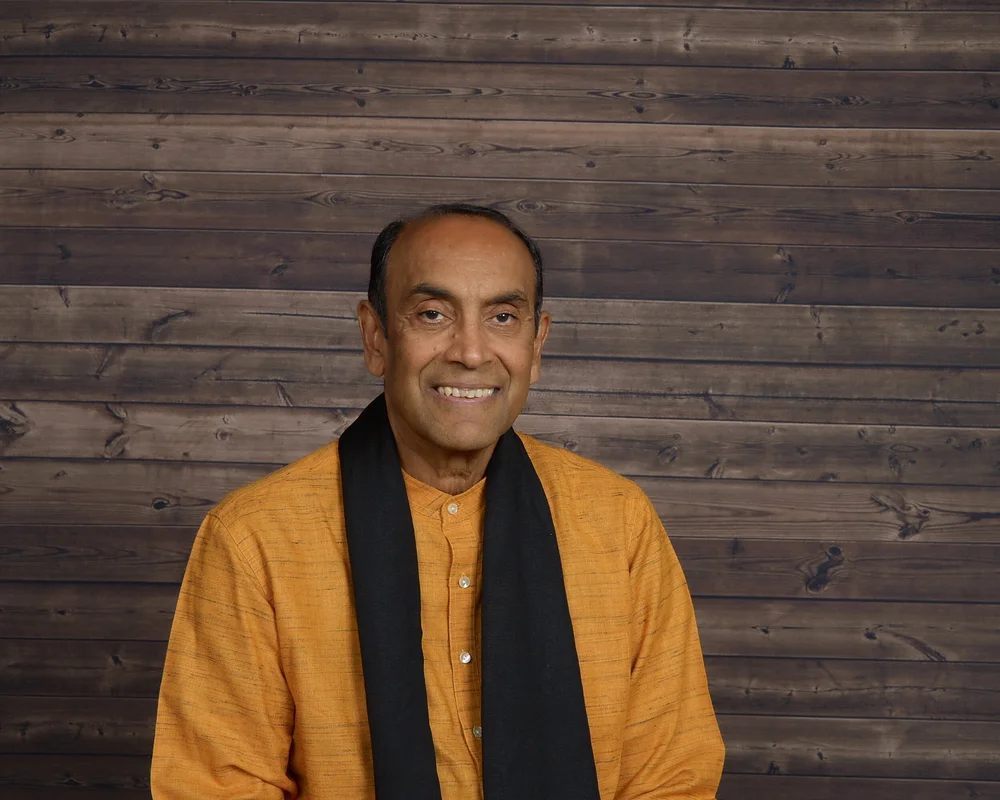
Anantanand Rambachan is Professor of Religion at Saint Olaf College, Minnesota. He was also Visiting Professor at the Academy for the Study of World Religions at the University of Hamburg in Germany (2013-2017). His books include: Accomplishing the Accomplished: The Vedas as a Source of Valid Knowledge in Shankara, The Limits of Scripture: Vivekananda’s Reinterpretation of the Authority of the Vedas, The Advaita Worldview: God, World and Humanity, A Hindu Theology of Liberation and Essays in Hindu Theology. His scholarly interests include: the Advaita (Non-dual) Vedanta tradition, Hindu ethics, liberation theology, and interreligous dialogue. The British Broadcasting Corporation transmitted a series of 25 lectures on Hinduism by Prof. Rambachan around the world.
Prof. Rambachan has been involved in interreligious relations and dialogue for over 25 years, as a Hindu contributor and analyst. He is active in the dialogue programs of the World Council of Churches, and was a Hindu guest and presenter in four General Assemblies of the World Council of Churches. He is also involved in the consultations of the Pontifical Council for Interreligious Dialogue at the Vatican and currently participates as a Hindu theologian in the Ethics in Action dialogues at the Pontifical Academy of Sciences. He also serves as the President of the Board, Arigatou International NY, a global organization advocating for the rights of children and mobilizing the resources of religions to overcome violence against children. He is a member of the Arigatou International Advisory Group. He was recently elected as Co-President of Religions for Peace, the largest global interfaith network.
Prof. Rambachan resides in Apple Valley, Minnesota, USA with his wife Geeta. They are the parents of Ishanaa, Aksharananda and Asheshananda.
Sand Talk: How Indigenous Thinking Can Save the World
From the publisher:

A paradigm-shifting book in the vein of Sapiens that brings a crucial Indigenous perspective to historical and cultural issues of history, education, money, power, and sustainability—and offers a new template for living.
As an indigenous person, Tyson Yunkaporta looks at global systems from a unique perspective, one tied to the natural and spiritual world. In considering how contemporary life diverges from the pattern of creation, he raises important questions. How does this affect us? How can we do things differently?
In this thoughtful, culturally rich, mind-expanding book, he provides answers. Yunkaporta’s writing process begins with images. Honoring indigenous traditions, he makes carvings of what he wants to say, channeling his thoughts through symbols and diagrams rather than words. He yarns with people, looking for ways to connect images and stories with place and relationship to create a coherent world view, and he uses sand talk, the Aboriginal custom of drawing images on the ground to convey knowledge.
In Sand Talk, he provides a new model for our everyday lives. Rich in ideas and inspiration, it explains how lines and symbols and shapes can help us make sense of the world. It’s about how we learn and how we remember. It’s about talking to everyone and listening carefully. It’s about finding different ways to look at things.
Most of all it’s about a very special way of thinking, of learning to see from a native perspective, one that is spiritually and physically tied to the earth around us, and how it can save our world.
For more information, please visit the Harper Collins website.