

The Sensory and Beyond
What do we and how can we know beyond what we can sense in the physical world? Contemplate Aquinas’ thoughts on why the philosophical limit of our sensations is cause for optimism, whether slothfulness might actually be a virtue, and how suffering is foundational to the development of our moral lives.
Experience the Event
What do we and how can we know beyond what we can sense in the physical world? Contemplate Aquinas’ thoughts on why the philosophical limit of our sensations is cause for optimism, whether slothfulness might actually be a virtue, and how suffering is foundational to the development of our moral lives.
The comprehensive and systematic character of Thomas Aquinas’ thought has for centuries informed inquiry into questions of human dignity, freedom, economic development, work, poverty, the environment, and other issues of global significance. Celebrate the 800th anniversary of the birth of Thomas Aquinas, exploring the ongoing importance of his thought to contemporary cultural, philosophical, and theological discussions. In gathering many of the most accomplished contemporary scholars of Aquinas’ thought from throughout the world working on themes in Ethics, Metaphysics, Epistemology, Anthropology, Political Theory, Christology, Trinitarian Theology, Sacramental Theology and Ecclesiology, among others, this series promotes fruitful interchange of diverse perspectives on the importance of Aquinas in the world today.
Featured Speakers:
- Moderator: Janet Effron, Director of Online Learning, McGrath Institute for Church Life, University of Notre Dame
- Roberto Zambiasi, Postdoctoral Researcher, De Wulf-Mansion Centre for Ancient, Medieval and Renaissance Philosophy, Institute of Philosophy, KU Leuven
- Derek McAllister, Instructor of Philosophy, Loyola University Maryland and Towson University
- Melanie Susan Barrett, Professor of Moral Theology, University of St. Mary of the Lake / Mundelein Seminary
Meet the Moderator: Janet Effron
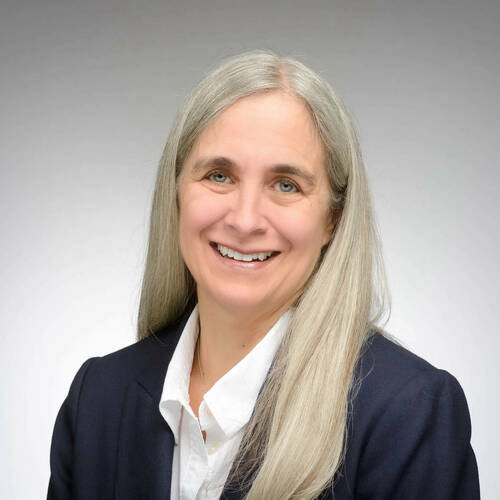
Janet Effron serves as the Director of Online Learning at the McGrath Institute for Church Life. She is responsible for supporting the development and delivery of online learning through effective use of technology as well as through analysis of course design, learner activity, and learning outcomes.
Coming from a technical background, Janet worked in the field of digital learning, creating data-driven methods to assess and improve instructional design in order to support learner success. After receiving an M.A. in Theology, she joined the McGrath Institute for Church Life in 2021.
Her areas of interest include user centered design, performance improvement, data analytics, text analytics, and process improvement. Current research areas include the impact of technology on evangelization and catechesis, and the optimization of learning experience design for distance learning.
Janet enjoys cycling, hiking with her family and dogs, and cozy evenings with a good book or a knitting project.
Meet the Speaker: Roberto Zambiasi

Roberto Zambiasi is a postdoctoral researcher at the De Wulf-Mansion Centre within Professor Russell Friedman’s project “Studying Medieval Hylomorphism Whole: Hylomorphic Theory in Intellectual Context, 1250-1400”. His research for the project deals with topics in late 13th- and early 14th-century hylomorphism, with a special focus on the issue of the quantitative structure of substantial forms.
Before coming to Leuven, Zambiasi obtained his PhD through a cotutelle agreement between the University of Turin in Italy (FINO Consortium) and the École Pratique des Hautes Études (EPHE) in Paris. His PhD thesis explores the 13th- and 14th-century Latin debate on the so-called issue of minima sensibilia, i.e. the problem of the divisibility of sensible qualities through the division of matter, as discussed by Aristotle in De sensu et sensato 6, 445b3-446a20.
Zambiasi’s research interests include conceptions of substantial forms and substantial change in Scholastic Aristotelian natural philosophy, later medieval theories of perception, and the medieval Latin commentary tradition on Aristotle’s libri naturales (especially the De sensu).
Meet the Speaker: Derek McAllister
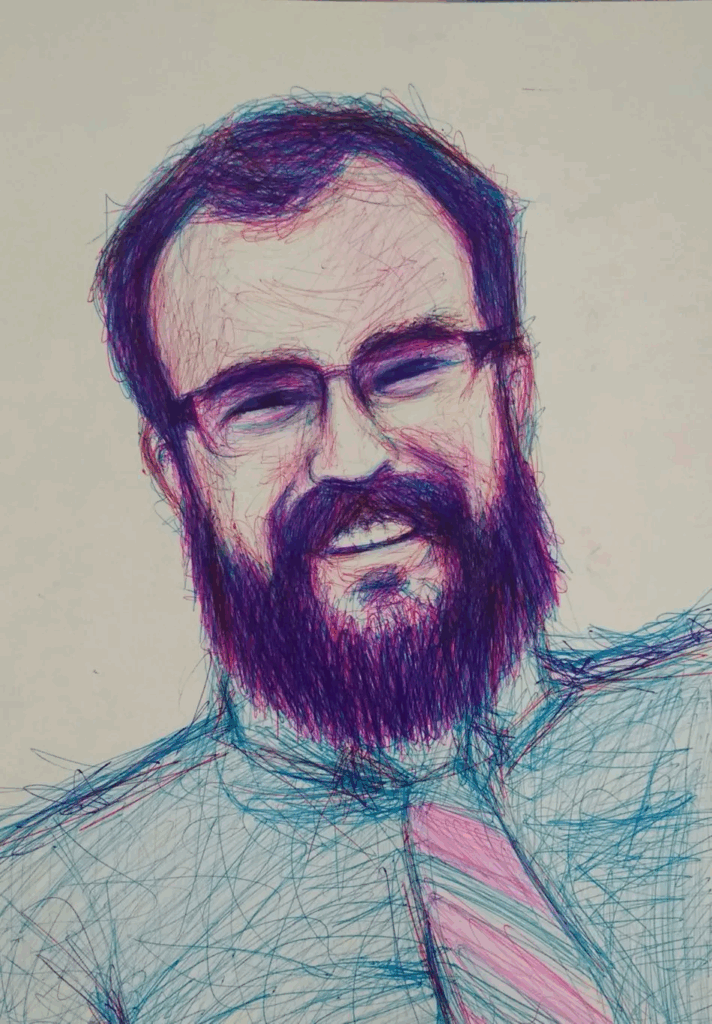
Derek McAllister is an Instructor of Philosophy at Towson University and Loyola University Maryland in Baltimore, Maryland. He specializes in History of Philosophy (esp. Medieval), History of and Philosophy of Psychiatry (esp. Depression, Human Flourishing), Virtue Ethics, and Medical Ethics. In addition, his curiosity spills over into areas like Philosophy of Religion, Philosophy of Emotion, Epistemology, and Existentialism.
A firm proponent for a holistic and wide-ranging education, and sharer of forgotten or unknown treasures (see my resources page), he is passionate about teaching Philosophy. He has taught at the college and university level since 2014. Learning what makes us flourish and live well has long held his fascination, and he tries to share that wonder with my students. His dissertation has focused on prima facie historical predecessors to depression–e.g., acedia, tristitia, noche oscura, melancholia, Tungsindighed, etc. He has been especially formed by the writings of Thomas Aquinas, Søren Kierkegaard, & St. John of the Cross. He has also had the privilege to shadow a Clinical Psychologist at the Waco Family Medical Center, and he received a Cross-Training Grant funded by the John Templeton Foundation for the 2019-2020 academic year to work in Baylor’s Psychology and Neuroscience Department for the purpose of gaining a deeper understanding of depression from a psychological, psychiatric, and neuroscientific perspective. Outside of philosophy, he enjoys dabbling in disciplines such as history, genealogy, philology & languages, & theology. Outside of academia, he loves traveling, watching football, and hiking or playing soccer with his son.
Meet the Speaker: Melanie Susan Barrett

Melanie Susan Barrett, Ph.D., S.T.D. is a professor of moral theology at the University of St. Mary of the Lake and Mundelein Seminary in Illinois.
She is currently completing a second book on suffering and the moral life in the work of Thomas Aquinas. Member of Chicago Studies editorial board. Member of the Society of Christian Ethics, the Academy of Catholic Theology, and the Catholic Theological Society of America.
Recent publications include: “Speaking and Enacting the Truth: Language and Virtue in Ecclesial Formation” (2025), “From New Age Syncretist to Catholic Moral Theologian” (2022), “David Novak and Jewish Natural Law: How a Theistic Believer Engages a Pluralistic and Secular Milieu” (2021), “Virtuous Obedience Amidst Competing Loyalties: Navigating the Ecclesial Landscape” (2021), “Catholic Voting: How Ecclesial Authority, Moral Principles, and Prudential Judgment Intersect” (2020), “Restoring our Christ-Centered Vision: The Seminary as Contemporary Bethsaida” (2020), “Pilate’s Question in a Post-Truth Context” (2019), “Ethics and the Need for God” (2018), “Continuity, Pope Francis, and Amoris Laetitia” (2018), and “Doctrine and Praxis in Pope Francis’s Approach to Evangelization” (2018). She is the author of Love’s Beauty at the Heart of the Christian Moral Life: The Ethics of Catholic Theologian Hans Urs von Balthasar.
She has a B.A. (Political Science and International Studies), Northwestern University. M.A. (Divinity) and Ph.D. (Religious Ethics), University of Chicago Divinity School. S.T.L. (Dogmatic Theology), University of St. Mary of the Lake., and S.T.D. (Moral Theology), University of Fribourg.