
Religious Epistemology
How can the humblest among us invert traditional hierarchies by sensing truth through deep faith? Lessons on the Eucharist deepen our sense of God living within us while trusting God’s Word secures belief in His power. Hear the call to reflect on these ideas to see your own journey to God from a fresh perspective.
Experience the Event
How can the humblest among us invert traditional hierarchies by sensing truth through deep faith? Lessons on the Eucharist deepen our sense of God living within us while trusting God’s Word secures belief in His power. Hear the call to reflect on these ideas to see your own journey to God from a fresh perspective.
The comprehensive and systematic character of Thomas Aquinas’ thought has for centuries informed inquiry into questions of human dignity, freedom, economic development, work, poverty, the environment, and other issues of global significance. Celebrate the 800th anniversary of the birth of Thomas Aquinas, exploring the ongoing importance of his thought to contemporary cultural, philosophical, and theological discussions. In gathering many of the most accomplished contemporary scholars of Aquinas’ thought from throughout the world working on themes in Ethics, Metaphysics, Epistemology, Anthropology, Political Theory, Christology, Trinitarian Theology, Sacramental Theology and Ecclesiology, among others, this series promotes fruitful interchange of diverse perspectives on the importance of Aquinas in the world today.
MoreMeet the Speaker: Noah Karger

Noah Karger is a Ph.D. student in the department of theology at the University of Notre Dame. His primary area of study is moral theology/Christian ethics. As a former 2024–2025 IBM graduate research fellow with the Notre Dame Institute for Ethics and the Common God, his research interests include fundamental moral theology, mystical theology, and medieval studies.
Meet the Speaker: Mats Wahlberg, Ph.D.

Mats Wahlberg, Ph.D., is docent and associate professor of systematic theology at Umeå University (Sweden), a member of the Academy of Catholic Theology, and a research fellow in the Discipline Group of Systematic Theology and Ecclesiology at the Faculty of Theology, Stellenbosch University, South Africa. In 2021, he was the Aquinas Chair at the Pontifical University of St Thomas Aquinas (the Angelicum) in Rome.
He has published two monographs, Reshaping Natural Theology: Seeing Nature as Creation (Palgrave Macmillan, 2012) and Revelation as Testimony: A Philosophical-Theological Study (Eerdmans, 2014), as well as many articles in journals such as Modern Theology, International Journal of Systematic Theology, International Journal for Philosophy of Religion, European Journal for Philosophy of Religion, and First Things.
His research interests include arguments for God’s existence, the problem of evil, the doctrine of revelation, theology and science (especially the theological implications of evolution) and the thought of St. Thomas Aquinas. Wahlberg’s research about the problem of evil and evolution has been funded by the John Templeton Foundation.
Meet the Speaker: Daniel Gordon '24 Ph.D.
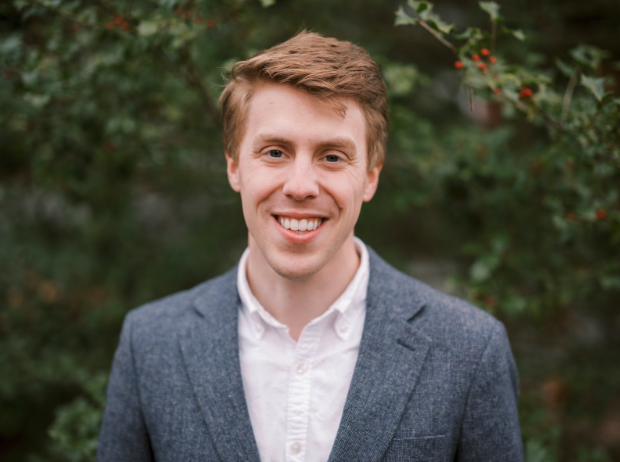
Daniel Gordon ’24 Ph.D. is an assistant professor in the department of theology at Ave Maria University. He was awarded the Richard and Peggy Notebaert Premier Fellowship in 2019 and received his Ph.D. in theology from the University of Notre Dame in 2024. His research focuses on the high medieval theology and early Christian theology.