
The Power of Learning Agendas
Unlock the blueprint for modern governance in this collaborative breakthrough featuring King County and Notre Dame’s Lab for Economic Opportunities (LEO). Learn how Learning Agendas transform evidence into equity-driven results. This recording is the essential toolkit for leaders seeking to accelerate organizational impact through community-centered policy evaluation.
Featured Speakers:
- Diana Epstein, Evidence Team Lead, Office of Management and Budget
- Keith Fudge, Senior Policy Program Manager, Urban Institute
- Dr. Calvin Johnson, Deputy Assistant Secretary, HUD
- Vincent Quan, Director of Strategic Partnerships and Innovation, JPAL North America
- Dr. Eva Wong, Senior Maternal and Child Health Epidemiologist, Public Health—Seattle & King County
Partner with LEO
The Evidence Matters series is sponsored on ThinkND by the Wilson Sheehan Lab for Economic Opportunities (LEO). Poverty is stubborn and requires the utmost collaboration of thought and action to drive change. People of goodwill must bring their unique strengths and positions together to solve this problem. At LEO, we believe knowledge has to be combined with action. But poverty can’t be solved by just one person, or even one sector. That’s why we bring together innovative social service provider partners, top-tier academics, philanthropists, policymakers, and others to tackle poverty.
Change is possible. And with your action, we can get one step closer to reducing poverty in our country, together.
Your job is to act. What will you do?
For more information, please visit LEO’s website.
More Like This
Related PostsLet your curiosity roam! If you enjoyed the insights here, we think you might enjoy discovering the following publications.
The Honesty Crisis
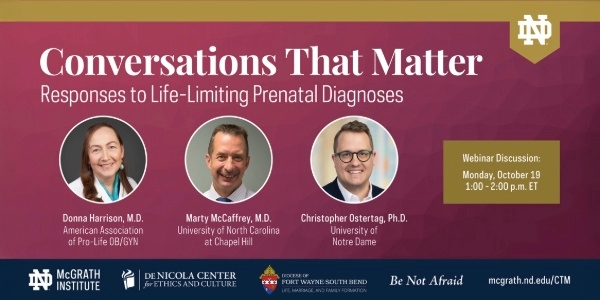
Conversations That Matter: Responses to Life-Limiting Prenatal Diagnoses
Helping Students See They Matter
Mattering
Annette Vee on AI-Aware Teaching
From Line Items to Impact
Civic Virtue
The Role of Joy with Cameron Kim and Laura Dunham