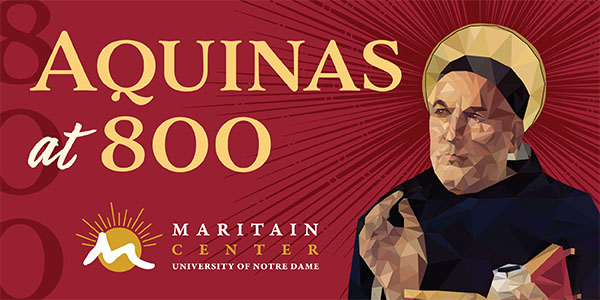
The “Aquinas at 800” conference session on metaphysics serves as a rigorous examination of the “transcendentals”—those properties of being that overspill traditional categories. By revisiting these Scholastic foundations, we gain a clearer understanding of how the human mind attempts to map the infinite perfection of the divine onto the finite structures of the world.
Movement I: The Distinction of Divine Attributes
The strategic challenge of divine naming begins with the “Inconsistent Triad.” At stake is the very coherence of theistic language: if God is absolutely simple, how can we truly predicate distinct attributes like “Will” and “Intellect” to Him? The logical tension is stark: If God’s Will (A) and Intellect (B) are both identical to His Essence (C), then by the transitivity of identity, Will must be Intellect (A=B). Yet, we say God Wills by His Will but not by His Intellect. To resolve this, Dominic Lanfia analyzes the shift from the semantic solutions of the nominalists and the metaphysical “formal distinctions” of the Scotists toward Aquinas’s nuanced cognitional theory.
Aquinas argues that while God is ontologically one, the human intellect employs diverse “similitudes”—concepts acting as signs—to grasp Him. Because our finite minds cannot integrally apprehend the infinite Divine Perfection, we must utilize various rationes to pick out different aspects of the same simple reality. This cognitional approach safeguards the theistic worldview by maintaining divine simplicity while acknowledging that our fragmented concepts are necessary, albeit partial, reflections of a greatness we cannot fully contain. This realization shifts the inquiry from how God is “divided” to how our intellect is structured to receive the One.
Movement II: The Trilemma of Transcendentals
Beyond the mind’s grasp of God lies the structural integrity of being itself. If the properties of being—the transcendentals—are not “convertible” (meaning they are necessarily found wherever being is found), the metaphysical floor of the universe drops away. Father Philip Neri Reese exposes a “trilemma” concerning the canonical list of transcendentals (aliquid, verum, bonum). The problem is whether these terms are “metaphysically significant”—that is, necessarily present in every instance of being.
Reese argues that we face a crisis of logic: we must either abandon the canonical list, admit that these properties are not essential to being, or accept an extreme restriction on divine omnipotence. This tension hinges on the distinction between “Vertical” (creature-to-God) and “Horizontal” (creature-to-creature) analogies. Within ens commune—the shared sphere of created being—a property like “Truth” (as intelligibility) requires a relationship to an intellect. While a solitary non-rational creature is “true” in relation to God (Vertical), God is the principle of ens commune and not contained within it. Therefore, for “Truth” to be a convertible property within the created order (Horizontal), an intellect must exist. To preserve the canonical list as significant, one must conclude that God cannot create a world containing only a single, non-rational being—a provocative boundary-test for Scholastic logic that ensures the universe remains an intelligible, interconnected whole.
Movement III: Peace as a Fundamental State of Being
The abstract architecture of divine naming and the structure of being find their generative fulfillment in the concept of Peace. Dr. Joshua Hochschild argues for reclaiming Peace as a transcendental, moving beyond the mere political negation of “lack of conflict” to reveal it as a positive, metaphysical presence. By reframing our understanding of peace, we transition from the “what” of existence to the “how” of its flourishing, seeing peace as the active integrity that allows a being to remain itself.
Drawing on the Aristotelian concept of entelecheia, Hochschild defines peace as “being at work remaining itself.” This is not a static state but a causal and generative force that extends from the interior life of a human to the simple unity of God. Peace is the active, productive unity that allows a being to fulfill its nature. By establishing Peace as convertible with being, we bridge the gap between abstract metaphysical attributes and the dynamic reality of a created order. This synthesis completes the theistic worldview: we move from the Simplicity of the Source (Movement I), through the Logical Order of Being (Movement II), to the actualization of that being as Peace (Movement III), revealing a reality that is not only structured but purposefully seeking rest in its own perfection.