
The Female Body and a Culture of Life
Is the belief that women's rights conflict with the rights of the unborn a modern invention? Melissa Moschella, professor of the practice at the McGrath Institute for Church Life at the University of Notre Dame, challenges the narrative, arguing that true respect for women and their bodies is inextricably linked to the protection of pre-born life.
Experience the Event
Presented by McGrath Institute for Church Life
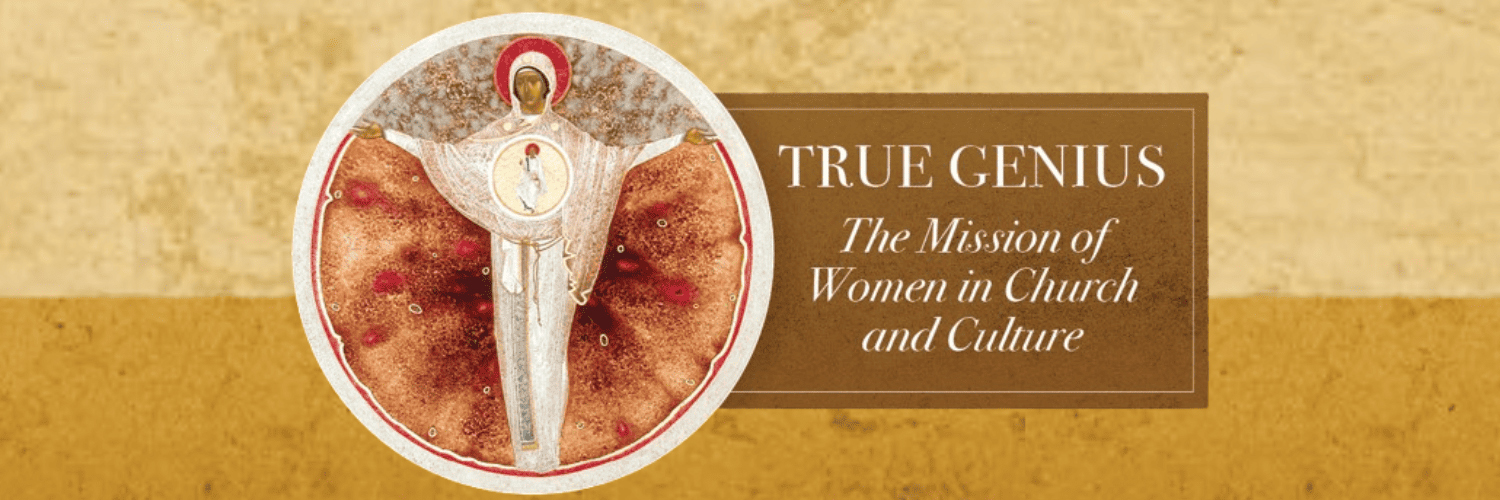
Is the belief that women’s rights conflict with the rights of the unborn a modern invention? Melissa Moschella, professor of the practice at the McGrath Institute for Church Life at the University of Notre Dame, challenges the narrative, arguing that true respect for women and their bodies is inextricably linked to the protection of pre-born life. “The Female Body & a Culture of Life,” took place at the McGrath Institute for Church Life conference True Genius: The Mission of Women in Church and Culture at the University of Notre Dame in March 2025, developed by Abigail Favale, Ph.D., Professor of the Practice, Theology & Literature, at the McGrath Institute for Church Life.
Thirty years ago, in both Evangelium Vitae and his Letter to Women, Pope John Paul II issued a clear call for the genius of women to be “more fully expressed in the life of society as a whole, as well as in the life of the Church” (Letter to Women 10). Throughout his papacy, in fact, he emphasized women’s “prophetic character,” calling on them to be “witnesses” and “sentinels” — guardians of the sacred gift of life and the order of love (Mulieris Dignitatem 29; Homily at Lourdes 2004).
Meet the Faculty: Melissa Moschella
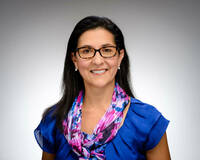
Melissa Moschella is a philosopher whose work spans the fields of ethics, political philosophy, and law. Her areas of special expertise include natural law theory, biomedical ethics, and the family (especially parental rights).
Melissa’s first book, To Whom Do Children Belong? Parental Rights, Civic Education, and Children’s Autonomy (Cambridge University Press, 2016), offers a foundational account of the nature and basis of parental rights, and argues that parents (not the state) have primary responsibility and authority to direct the education and upbringing of their children. Her second book, Ethics, Politics, and Natural Law: Principles for Human Flourishing (University of Notre Dame Press, Spring 2025) offers a fresh and accessible yet rigorous presentation of the influential natural law account of ethics and politics that has come to be known as “new natural law theory.” Melissa has also published numerous articles in scholarly journals as well as popular media outlets, including Bioethics, The Journal of Medical Ethics, The American Journal of Bioethics, The Journal of Medicine and Philosophy, Notre Dame Law Review, The Journal of Law and Religion, The Public Discourse, First Things, The New York Times, The Wall Street Journal, USA Today, and The Washington Post. She serves as Associate Editor of Theoretical Medicine and Bioethics, on the editorial board of the National Catholic Bioethics Quarterly, and on the editorial advisory board of The Journal of Medicine and Philosophy. She graduated magna cum laude from Harvard College, earned a Licentiate in Philosophy summa cum laude from the Pontifical University of the Holy Cross, and received her Ph.D. in Political Philosophy from Princeton University.
Melissa contributes to the mission of the MICL through her research, writing, teaching, and public speaking on a variety of contemporary topics, including religious freedom, bioethical issues, and issues related to marriage and family. In particular, she collaborates frequently with the Notre Dame Office of Life and Human Dignity and the Science & Religion Initiative. She also teaches regularly in the Business, Ethics, and Society Program in the Mendoza College of Business. Before coming to Notre Dame, Melissa was Associate Professor of Philosophy at the Catholic University of America, where she worked for over a decade.
When she is not busy with her academic pursuits, Melissa enjoys singing (especially choral singing), playing the piano, gardening, cooking, biking, and hiking. She lives in South Bend with her husband, David Cloutier, an expert in Catholic social ethics who is a Professor in the Department of Theology and Director of the Business, Ethics, and Society Program in the Mendoza College of Business.