

The Drama of Worship

Listen in to a conversation between Kimberly Belcher ‘03 MA, ‘09 Ph.D., associate professor of theology, J. J. Wright ‘14 MSM, ‘17 DMA, Grammy® Award winner and Director of the Notre Dame Folk Choir, and Eric Styles, who joins the podcast to discuss the contributions of African Americans to the American Catholic Church, in particular the gifts of Black Catholics like pioneering liturgical musician Fr. Clarence Joseph Rivers. Uncover the cultural, dramatic, and theatrical elements involved in worship as the Christians of today seek to express and embody faith, hope, justice, and love.
Experience the Episode
Presented by Department of Theology
Friday, June 6, 2025 12:00 pm
Draw on centuries-old tradition of singing Psalms and Canticles in the Liturgy of the Hours to discover a conceptual framework for bringing your own experiences, ideas, and musical background into creative conversation with liturgy and prayer. Experience Rhythms of Faith—no musical experience required!
Listen in to a conversation between Kimberly Belcher ‘03 MA, ‘09 Ph.D., associate professor of theology, J. J. Wright ‘14 MSM, ‘17 DMA, Grammy® Award winner and Director of the Notre Dame Folk Choir, and Eric Styles, who joins the podcast to discuss the contributions of African Americans to the American Catholic Church, in particular the gifts of Black Catholics like pioneering liturgical musician Fr. Clarence Joseph Rivers. Uncover the cultural, dramatic, and theatrical elements involved in worship as the Christians of today seek to express and embody faith, hope, justice, and love.
Meet the Speaker: Eric Styles
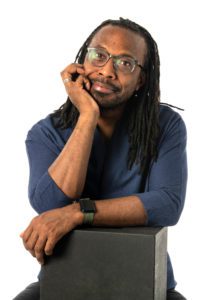
Eric T. Styles, since 2016, has served as the Rector of Carroll Hall, an intentional undergraduate residential community at the University of Notre Dame. A Chicago native, he holds degrees from the University of Cincinnati and Loyola University Chicago. Eric worked as a Parish Liturgy Coordinator at Saint Benedict the African Catholic Church in Chicago and as a House Manager for the Theatre School of DePaul University. He discerned religious life for seven years with the Society of Jesus, during which time he prayed the thirty day retreat designed by St. Ignatius Loyola and received formal training in spiritual direction. He later left the Jesuits and eventually found his way to Saint Mary’s University of Minnesota, where he worked as a Campus Minister for Liturgy and Faith Formation. Now at Notre Dame, he continues to assist as a retreat leader and an occasional spiritual director. Eric remains active in the performing arts as a collaborator with Afro House, a Baltimore based music driven performance art ensemble. Eric writes about theology, liturgy, and contemporary culture for publications like America, Church Life Journal, and U.S. Catholic. He is deeply interested in the intersections of ritual, performing arts, communal identity, and the interior life. Eric is the co-host of Meet Father Rivers, a podcast about the extraordinary liturgical and musical contributions of Father Clarence-Rufus Joseph Rivers.
Journal Exercise
- Read Psalm 79 aloud, slowly and contemplatively. (Full text found here.) Spend some time with the text.
- Note in your journal what emotions the Psalm evokes in you.
- Reflect and record in your journal: to what current event, news story, or recent headline might this Psalm apply today? Another way of asking the same question: What contemporary issue, concern, circumstance, or situation deserves national lament?*
- In your own words, write an antiphon** (fifteen words or less) that laments the event or issue upon which you reflected in (3) above.
- Think and record in your journal: what does the antiphon you have written in (4) say about one of the four theological themes/subdisciplines discussed in class (theology, cosmology, ecclesiology, or anthropology)? That is, what does your antiphon say or suggest about God? about the world/cosmos? about the church/community? about human beings?
- Choose a sound or an instrument to express your lament. Name or describe the sound or instrument.
- Re-read Psalm 79 aloud, slowly and contemplatively, beginning and ending with your antiphon.
*Recall that Psalms of lament typically contain three elements: a crying out to God in the midst of pain/suffering/violence/etc., the naming of a just complaint, and concluding with a turn to hope.
**Recall that an antiphon is a thematic refrain to be repeated at the beginning and end of a Psalm when it is prayed aloud.