

Sustainable Hope: Energy, Environment, and the Future of Ukraine

Marking the 80th anniversary of the UN Charter, this panel explores the shift from an “ideology of destruction” to decentralized green infrastructure. Discover how environmental law and energy innovation are securing Ukraine’s sovereignty and the future of international accountability.
Experience the Event
Presented by The Nanovic Institute for European Studies
Marking the 80th anniversary of the UN Charter, this panel explores the shift from an “ideology of destruction” to decentralized green infrastructure. Discover how environmental law and energy innovation are securing Ukraine’s sovereignty and the future of international accountability.
Speakers include:
- Carl Bruch (Environmental Law Institute): “Pathways for Accountability for Wartime Environmental Damage in Ukraine”
- Olga Degtiareva (Odesa National University of Economics) and Albina Dioba (Copenhagen Business School): “Decentralized Energy System: A Hope for a Sustainable and Resilient Energy Future in Ukraine”
- Kristina Hook (Kennesaw State University): “The Environmental Impacts of the Russia-Ukraine War: Impacts, Intent, and Recovery”
- Natalia Slobodian (Canterbury Christ Church University): “Towards Sustainable Peace: Hope and Environmental Restoration in Post-War Ukraine”
Revolutions of Hope: Resilience and Recovery in Ukraine is a collaboration between Notre Dame’s Nanovic Institute, part of the Keough School of Global Affairs, and Ukrainian Catholic University (UCU). The conference, hosted at the University of Notre Dame in March 2025, focused on the positive and corrective response to this destruction, exploring reasons for hope, sources of hope, and the politics and ethics of hope in Ukraine. How is hope powerful or even revolutionary? How does it encourage resilience and recovery? And, above all, how can we build and promote the integral development of hope in Ukraine? The conference explored the concept, dynamics, and practices of hope through keynote addresses, panel discussions, the arts, and liturgical observances. For more information visit the event website.
Co-sponsors included:
- Department of German, Slavic, and Eurasian Studies
- Kellogg Institute for International Studies
- Kroc Institute for International Peace Studies
- Notre Dame Democracy Initiative
- Notre Dame Global
- Office of the President, University of Notre Dame
- The Program of Creative Writing
- Raclin Murphy Museum of Art
- Ukrainian Catholic University
Meet the Speaker: Carl Bruch
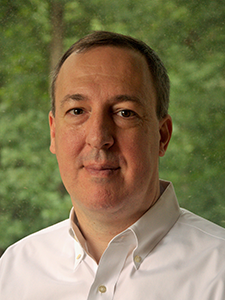
Carl Bruch is a senior attorney and director of international programs at the Environmental Law Institute. His research focuses on making environmental law work. He has helped countries across Africa, Latin America, the Middle East, and Asia develop and implement laws, policies, and institutional frameworks to effectively manage water resources, biodiversity, forests, and other natural resources. He is an authority on the means to manage natural resources to support post-conflict peacebuilding, on environmental governance and institutions, and on ways to prevent, reduce, mitigate, and compensate for damage to the environment during armed conflict.
In addition to working at ELI, Bruch has been an attorney with the United Nations Environment Program (UNEP) and the Environmental Law Alliance Worldwide (E-LAW). He is an adjunct professor with American University School of International Service, where he teaches a master’s-level course on environmental peacebuilding.
Meet the Speaker: Olga Degtiareva
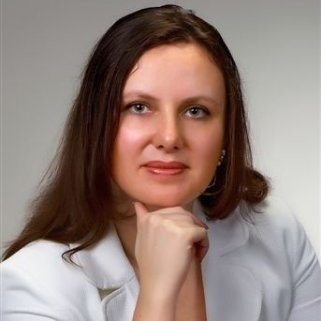
Olga Degtiareva is an associate professor at Odessa National Economic University in Ukraine. With a proven track record of mentoring bachelor’s, master’s, and Ph.D. students, Olga leads interdisciplinary research projects focused on sustainable development and public administration while driving impactful education, research, and NGO initiatives both in Ukraine and internationally. Her work consistently fosters innovative solutions and delivers meaningful contributions through strategic collaboration in academia and beyond.
Meet the Speaker: Albina Dioba

Albina Dioba is a postdoctoral fellow at Copenhagen Business School. She holds a Ph.D. in Economics from Simon Kuznets Kharkiv National University of Economics, Ukraine, specializing in public administration and sustainable development. Her research focuses on applying behavioral science to promote pro-environmental behavior change. Currently, as a postdoctoral fellow at the Sustainability Center of Copenhagen Business School, she involves in EU Horizon 2020 projects like P2GreeN, Vision¤Food and BECoop, emphasizing the circular economy, stakeholder engagement, and energy communities. She also contributes to the CBS urban gardening initiative, Permahaven, with a focus on biodiversity conservation.
Meet the Speaker: Kristina Hook '20 Ph.D.
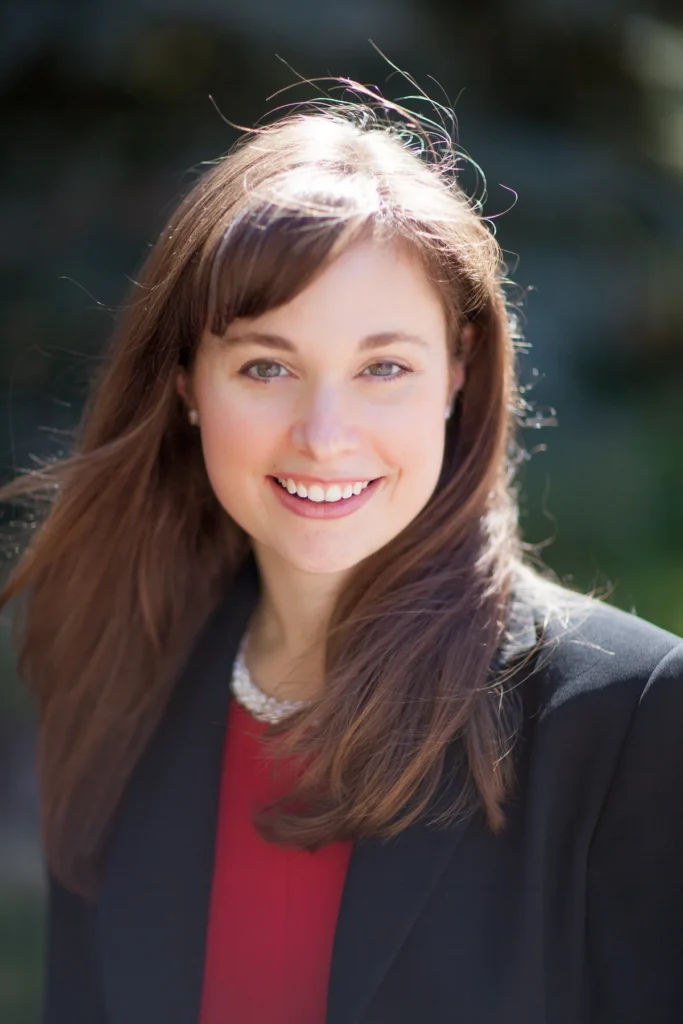
Dr. Kristina Hook ’20 Ph.D. is an anthropologist specializing in genocide and mass atrocity prevention. She has conducted multi-year fieldwork in Ukraine since 2015, supported by grants from the National Science Foundation, Department of Defense, Fulbright, USAID, and others. A recipient of a National Endowment for the Humanities Fellowship, Dr. Hook’s book on the legacy of the Ukrainian Holodomor against the backdrop of the Russia-Ukraine war is forthcoming.
Dr. Hook’s analysis has also appeared in Foreign Affairs, Bulletin of the Atomic Scientists, Genocide Studies and Prevention, International Negotiation, Small Wars and Insurgencies, Foreign Policy, CNN, USA Today, Washington Post, and elsewhere. Her research on the Russia-Ukraine war has won multiple awards and has been cited by the International Court of Justice, United Nations, NATO, Parliamentary Assembly of Europe, U.S. government, and others. In 2024, Dr. Hook was a top-three finalist for the Conference-USA Professor of the Year.
Dr. Hook received her joint PhD in anthropology and peace studies from the University of Notre Dame’s Kroc Institute for International Peace Studies and Anthropology Department. She previously served as a U.S. Department of State policy adviser, as a nonresident research fellow at the Marine Corps University, and as a U.S. Presidential Management Fellow. She is presently a Nonresident Senior Fellow at the Atlantic Council’s Eurasia Center.
Meet the Speaker: Natalia Slobodian
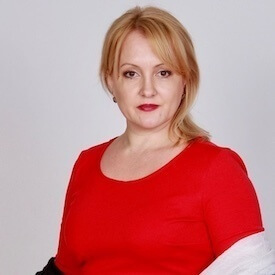
Natalia Slobodian is a distinguished expert in sustainable development within the energy sector. With over a decade of specialized experience and more than fifteen years as a senior researcher and lecturer at Taras Shevchenko Kyiv National University, she has made many significant contributions to the field. Holding a habilitation in human sciences, Dr. Slobodian has authored several journal articles, including “Russia’s Energy Policy as an Instrument of Influence in Europe” and “War in Ukraine: The Case for Environmental Peacebuilding and Reparations.”
Meet the Moderator: Diane Desierto
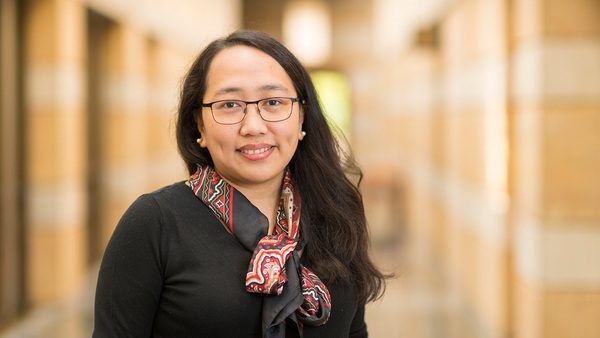
Diane A. Desierto holds a joint appointment in the Keough School of Global Affairs and the Notre Dame Law School, where she is professor of law and LLM faculty director. She is a faculty fellow in the Keough School’s Klau Institute for Civil and Human Rights, Kellogg Institute of International Studies, Liu Institute for Asia and Asian Studies, Nanovic Institute of European Studies, and Pulte Institute for Global Development. She is also co-principal investigator of the Notre Dame Reparations Design and Compliance Lab. Desierto teaches, publishes, and practices in international law and human rights, international economic law and development, international arbitration, maritime security, Association of Southeast Asian Nations (ASEAN) Law, and comparative public law.
Desierto authored and/or edited several books, such as Necessity and National Emergency Clauses: Sovereignty in Modern Treaty Interpretation (Martinus Nijhoff, 2012) recipient of the Ambrose Gherini Prize in International Law at Yale Law), Public Policy in International Economic Law: The ICESCR in Trade, Investment and Finance (Oxford University Press, 2015), ASEAN Law and Regional Integration: Governance and the Rule of Law in Southeast Asia’s Single Market (with D. Cohen, Routledge, 2020), as well as, to date, about 140 law review articles, book chapters, essays, and book reviews with leading international law journals and publishers in the United States, Europe, and Asia.