
After the Evaluation
Can a bus pass prevent a jail sentence? Listen in to discover the “myth-busting” power of co-discovery. Join King County, Notre Dame’s LEO, and Stanford’s REGG Lab as they explore how high-stakes partnerships transform rigorous econometrics into equitable, real-world policy change.
Experience the Event
Can a bus pass prevent a jail sentence? Listen in to discover the “myth-busting” power of co-discovery. Join King County, Notre Dame’s LEO, and Stanford’s REGG Lab as they explore how high-stakes partnerships transform rigorous econometrics into equitable, real-world policy change.
Featured Speakers:
- May Lynn Tan, Assistant Deputy Director, Evidence for Action (RWJF) (at time of study)
- Matthew Freedman, Professor of Economics, University of California-Irvine
- Daniel E. Ho, William Benjamin Scott and Luna M. Scott Professor of Law, Standford University
- Kimberly Dodds, Homelessness Prevention Manager, King County
- David Phillips, Associate Research Professor, LEO
- Becky Elisa, MBA, Food Protection Program Environmental Health Services, Public Health- Seattle & King County (at time of study)
- Dr. Eyob Mazengia, Assistant Division Director, EH Seattle & King County Public Health
- Maria Jimenez-Zepeda, ORCA Reduced Fare Project Program Manager, King County Metro Transit
Partner with LEO
The Evidence Matters series is sponsored on ThinkND by the Wilson Sheehan Lab for Economic Opportunities (LEO). Poverty is stubborn and requires the utmost collaboration of thought and action to drive change. People of goodwill must bring their unique strengths and positions together to solve this problem. At LEO, we believe knowledge has to be combined with action. But poverty can’t be solved by just one person, or even one sector. That’s why we bring together innovative social service provider partners, top-tier academics, philanthropists, policymakers, and others to tackle poverty.
Change is possible. And with your action, we can get one step closer to reducing poverty in our country, together.
Your job is to act. What will you do?
For more information, please visit LEO’s website.
MoreMeet the Speaker: May Lynn Tan
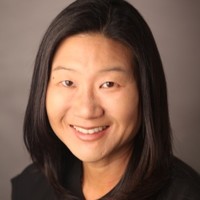
May Lynn Tan joined the California Association of Food Banks (CAFB) in 2022 to help improve the use of data and research in food banking and advocacy. She has previously worked as a food bank nutritionist, food pantry manager, and non-profit executive director. Before CAFB, she worked for a funding program of the Robert Wood Johnson Foundation on strategies to advance health equity through research. Her own research has focused on child food insecurity and the impact of universal school meals. May Lynn holds a Master of Health Science degree from the Johns Hopkins Bloomberg School of Public Health and a Doctorate in Public Health from UC Berkeley.
Meet the Speaker: Daniel E. Ho
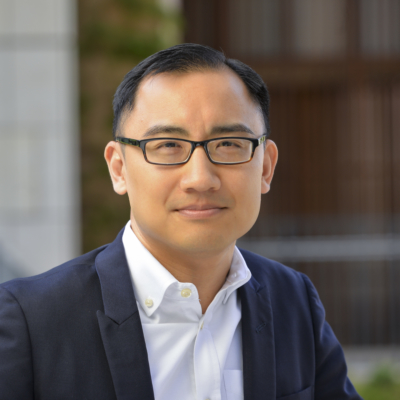
Daniel E. Ho is the William Benjamin Scott and Luna M. Scott Professor of Law, Professor of Political Science, Professor of Computer Science (by courtesy), Senior Fellow at the Stanford Institute for Human-Centered Artificial Intelligence (HAI), Senior Fellow at the Stanford Institute for Economic Policy Research, and Director of the Regulation, Evaluation, and Governance Lab (RegLab) at Stanford University.
His scholarship focuses on administrative law, regulatory policy, and antidiscrimination law. With the RegLab, his work has developed high-impact demonstration projects of data science and machine learning in public policy, through partnerships with a range of government agencies, including the Internal Revenue Service, the Treasury Department, the Environmental Protection Agency, the San Francisco City Attorney’s Office, the Department of Labor, Santa Clara County, and Seattle and King County Public Health.
He received his J.D. from Yale Law School and Ph.D. from Harvard University and clerked for Judge Stephen F. Williams on the U.S. Court of Appeals, District of Columbia Circuit. He is the recipient of numerous awards, including the John Bingham Hurlbut Award for Excellence in Teaching at Stanford Law School, the Carole Hafner Award for the best paper at the International Conference on Artificial Intelligence and Law, the Best Empirical Paper Prize from the American Law and Economics Review, Best Paper Awards at the annual meeting of the Association for Computational Linguistics (ACL), the ACM Conference on Fairness, Accountability, and Transparency (FAccT), the AAAI/ACM Conference on AI, Ethics, and Society (AIES), the SafeBench First Prize in AI Safety, and the Warren Miller prize for the best paper published in Political Analysis.
Meet the Speaker: Becky Elisa, MBA

Becky Elisa, MBA is an executive leader in government and industry who is deeply passionate about the intersection of food, health and community. She has nearly 20 years of experience in the food system, where she enabled schools to serve fresh fruits and vegetables, food inspectors to become more consistent, the public to make more informed dining decisions, and the retail food industry to integrate holistic food safety and public health practices.
During her time leading Global Retail Food Safety and Public Health at Starbucks, her team supported safe launches of innovative products, reusable cups and food donation at scale. She also facilitated global food safety harmonization, led internal audit systems and optimized retail practices. She guided the company through the pandemic, enabling resilience with safe and nimble operations, and best-in-class employee health programs. As the head of the Food Safety Program for Public Health – Seattle & King County, Becky applied an educational approach to regulatory compliance. She launched a cutting-edge food safety rating system, innovative inspector consistency programs, and a public disclosure process for foodborne illness outbreaks.
Becky has a B.A. from the University of Michigan and an M.B.A in organizational development and multiple-bottom-line business from Antioch University.
Meet the Speaker: Dr. Eyob Mazengia
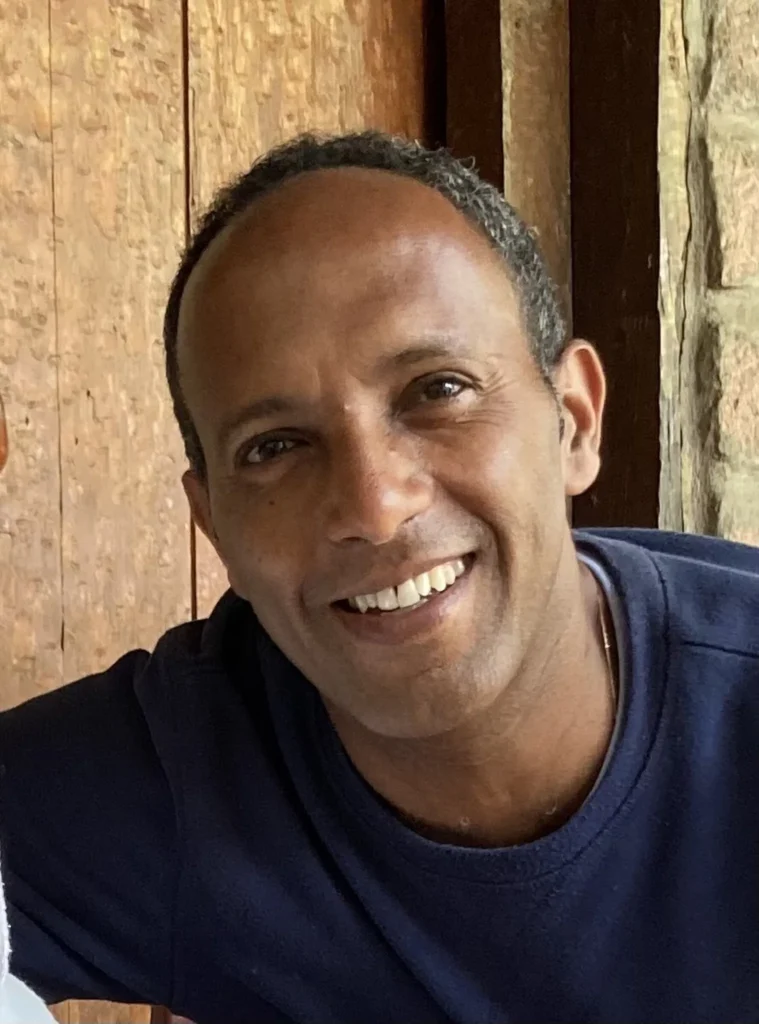
Dr. Eyob Mazengia is a Public Health Scientist specializing in Environmental Public Health, Microbiology and Epidemiology of food and waterborne pathogens. His work experience encompass: Laboratory method development for detection of pathogens/indicator organisms in water and food, microbial source tracking, environmental surveillance for parasites in source water, sewage and biosolid materials, and market prevalence of foodborne pathogens. He has worked in various settings including, university, private research firm and state and local government agencies, as well as run his own private PH consulting firm. He currently works with Public Health Seattle and King County, supervising senior and mid level public health investigators. Some of his expertise include, work force and program development, conduct and supervise public health investigations, conduct research, interpret microbiological data, write reports and conduct analysis, develop and analyze policies, establish QA/QC, review and approve HACCP, conduct field audits of food processing establishments, food/water/environmental sampling during investigations; evaluate safety of food process and controls, and provide ongoing trainings and mentorship.
Meet the Faculty: David Phillips

As research faculty, David Phillips is a professor who conducts LEO research full-time. He collaborates with service providers to measure the differences their services make in the lives of their clients and in the fight against poverty. For each project, David leads the academic side of the partnership and helps design the research evaluation, implement it, and analyze the data. He received his BA in Economics and Mathematics from Butler University and his PhD in Economics from Georgetown University. David specializes in housing, criminal justice, transportation, and low-wage labor market research.
Meet the Speaker: Matthew Freedman
Matthew Freedman is a Dean’s Professor in the Department of Economics at the University of California, Irvine. He is also a co-editor at Regional Science and Urban Economics. His primary research interests are in urban economics, public finance, and labor economics. His work has also addressed topics in environmental economics and the economics of crime. He received his Ph.D. in economics from the University of Maryland-College Park.
For the 2025-26 academic year, Matthew Freedman is a Visiting Professor in the Centre for Economic Performance at the London School of Economics and Political Science. He is also an affiliated researcher with Notre Dame’s Wilson Sheehan Lab for Economic Opportunities.
Meet the Speaker: Maria Jimenez-Zepeda
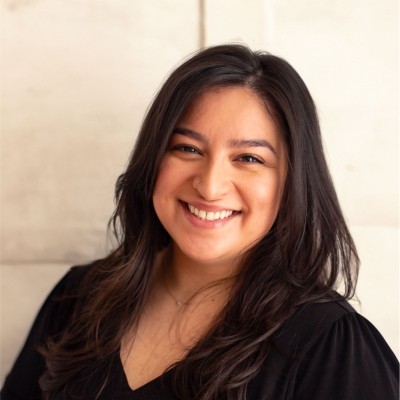
Maria Jimenez-Zepeda is a project/program manager with the Safety Emphasis Program at King County Metro Transit, and served as a leader in the ORCA Reduced Fare Program with King County Metro. She previously worked as the Immigrant and Refugee Commissioner for the City of Seattle. She has a Bachelor’s in Psychology from Yale University and an MPA from the Evans School of Public Policy & Governance at the University of Washington.
Meet the Speaker: Kimberly Dodds

Kimberly Dodds serves as the Homelessness Prevention Program Manager for King County, Washington.