
Iran, Saudia Arabia, the United States and the Way Forward
A discussion of the escalating tensions between the United States and Iran following September 14 drone strikes on Saudi Aramco oil processing facilities. George Lopez, the Rev. Theodore Hesburgh Professor Emeritus of Peace Studies sits down to talk with Susan Page, visiting professor of the practice at the Keough School of Global Affairs, Ebrahim Moosa, professor Islamic Studies, and David Cortright, Kroc Institute Director of Policy Studies and the Peace Accords Matrix Project.
Experience the Episode
Presented by Kroc Institute for International Peace Studies
A discussion of the escalating tensions between the United States and Iran following September 14 drone strikes on Saudi Aramco oil processing facilities. George Lopez, the Rev. Theodore Hesburgh Professor Emeritus of Peace Studies sits down to talk with Susan Page, a Professor from Practice at Michigan Law, Ebrahim Moosa, professor Islamic Studies, and David Cortright, Professor Emeritus of the Practice at the Keough School of Global Affairs.
This episode was originally published by the Kroc Institute for International Peace Studies on September 27, 2029. To explore the entire library of Kroc Cast podcast episodes and for more information , please visit kroc.nd.edu.
MoreMeet the Faculty: George A. Lopez
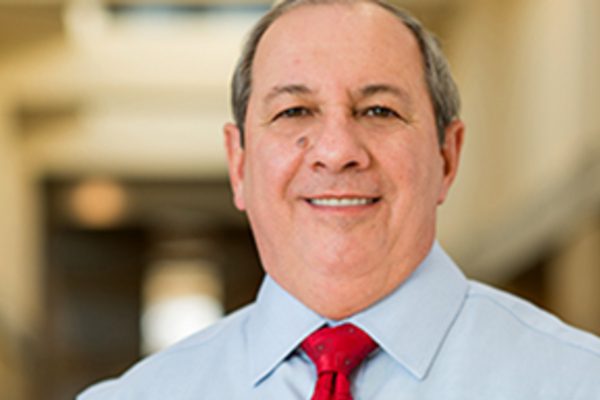
George A. Lopez is the Rev. Theodore M. Hesburgh, C.S.C., Professor Emeritus of Peace Studies at the Kroc Institute for International Peace Studies, where he was a founding faculty member. He is a leading expert on economic sanctions, peacebuilding, and various peace-related issues. As a logical extension of his teaching and research with the Kroc Institute, Lopez has engaged in a diverse set of policy and public roles. He served as interim executive director of the Bulletin of the Atomic Scientists in 1997 and chaired its Board of Directors (1998-2003), presiding over changing the hands of the Doomsday Clock in 2002. As a senior research associate at the Carnegie Council on Ethics and International Affairs in New York City from 2001-2002, he assisted with the Council’s post-9/11 public programming throughout the U.S. From 2013-15, he was the Vice President of the Academy for International Conflict Management and Peacebuilding at the United States Institute of Peace (USIP) in Washington, D.C.
Since 1992, Lopez has advised the United Nations, various international agencies, and governments on economic sanctions issues, ranging from the design of targeted financial sanctions to redressing their negative humanitarian impacts. He has written more than 40 articles and book chapters and authored or edited six books (often with Kroc Institute faculty member David Cortright) on sanctions. Lopez and Cortright’s research detailing the unlikely presence of weapons of mass destruction in Iraq was published before the 2003 Iraq War as “Disarming Iraq” in Arms Control Today and after the war as “Containing Iraq: the Sanctions Worked” in Foreign Affairs. In 2010-11 and again in 2022-23 Lopez served on the UN Panel of Experts (1874) for monitoring sanctions on North Korea. In 2022 he co-founded https://ahsrproject.org to address the negative impact of economic sanctions on innocent populations.
Meet the Faculty: Susan Page
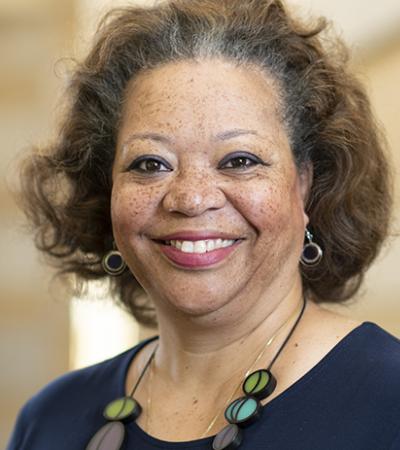
Susan D. Page, a professor from practice at Michigan Law, was the first US ambassador to the Republic of South Sudan and served as assistant secretary-general of the United Nations in Haiti, among other senior diplomatic roles. Most recently, she was a visiting professor of practice at the Keough School of Global Affairs at the University of Notre Dame.
She also has served as attorney-advisor for politico-military affairs, USAID regional legal adviser in Kenya and Botswana covering East and Southern Africa, political officer in Rwanda, regional director for Southern and East Africa at the National Democratic Institute for International Affairs, and as Chargé d’Affaires to the U.S. Mission to the African Union/Permanent Representative to the United Nations (UN) Economic Commission for Africa. In 2017, she served as Assistant Secretary General and Special Representative of the UN Secretary General for the Peacekeeping Mission for Justice Support in Haiti. Page earned an AB with high distinction in English from the University of Michigan and a JD from Harvard Law School
Meet the Faculty: Ebrahim Moosa
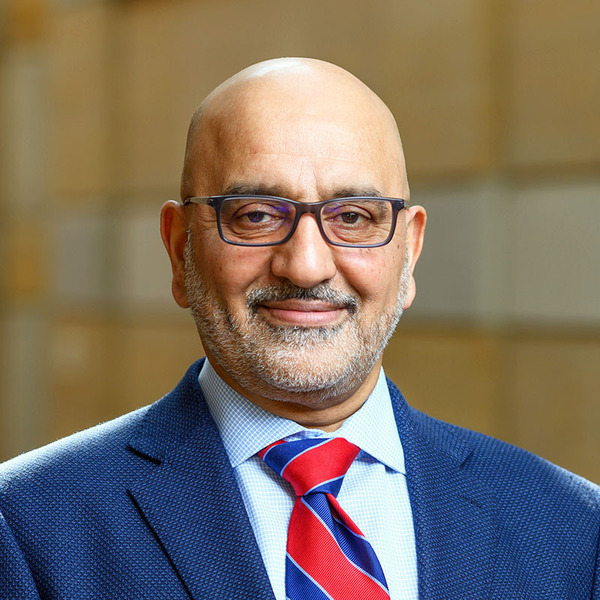
Ebrahim Moosa (PhD, University of Cape Town 1995) is Mirza Family Professor of Islamic Thought and Muslim Societies in the Keough School of Global Affairs at the University of Notre Dame. He co-directs, with Scott Appleby and Atalia Omer, Contending Modernities, the global research and education initiative examining the interaction among Catholic, Muslim, and other religious and secular forces in the world. He is a faculty fellow of the Keough School’s Liu Institute for Asia and Asian Studies.
Moosa’s interests span both classical and modern Islamic thought with a special focus on Islamic law, history, ethics and theology. He is the author of Ghazali and the Poetics of Imagination, winner of the American Academy of Religion’s Best First Book in the History of Religions (2006) and editor of the last manuscript of the late Professor Fazlur Rahman, Revival and Reform in Islam: A Study of Islamic Fundamentalism.
Meet the Faculty: David Cortright '68
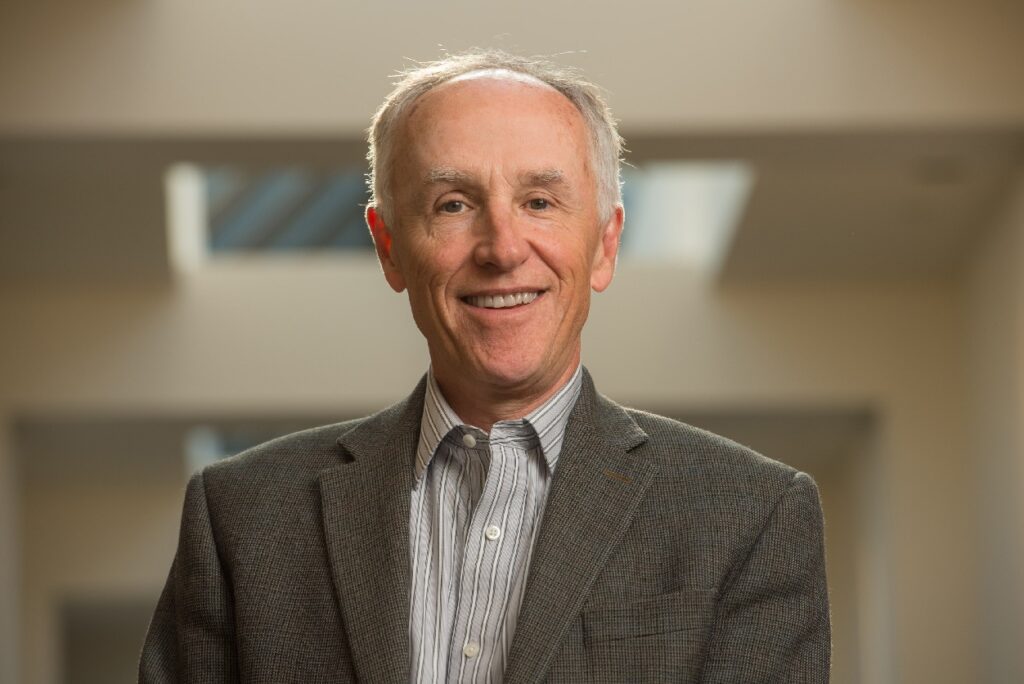
David Cortright ’68 is professor emeritus of the practice at the Keough School of Global Affairs at the University of Notre Dame. Previously, Cortright was the director of policy studies at the Keough School’s Kroc Institute for International Peace Studies and director of the institute’s Peace Accords Matrix project, the largest existing collection of implementation data on intrastate peace agreements.
Cortright is the author or co-editor of 23 books, including including “Protest and Policy in the Iraq, Nuclear Freeze and Vietnam Peace Movements” (Cambridge University Press Elements, 2025), “Civil Society, Peace and Power“ (Rowman & Littlefield, 2016), and “Drones and the Future of Armed Conflict“ (University of Chicago, 2015). He also is chair of the Board of the Fourth Freedom Forum.
Other recent works by Cortright include the second edition of “Gandhi and Beyond: Nonviolence for a New Political Age“ (Paradigm, 2009), “Peace: A History of Movements and Ideas “(Cambridge University Press, 2008), and “Uniting Against Terror: Cooperative Nonmilitary Responses to the Global Terrorist Threat“ (MIT, 2007), co-edited with George A. Lopez. Over the past decade, Cortright and Lopez have written or co-edited a series of major works on multilateral sanctions, including “Smart Sanctions“ (Rowman & Littlefield, 2002), “Sanctions and the Search for Security“ (Lynne Rienner, 2002) and “The Sanctions Decade“ (Rienner, 2000). Cortright also is editor of “The Price of Peace: Incentives and International Conflict Prevention“ (Rowman & Littlefield, 1997).