
Our Wicked Problems
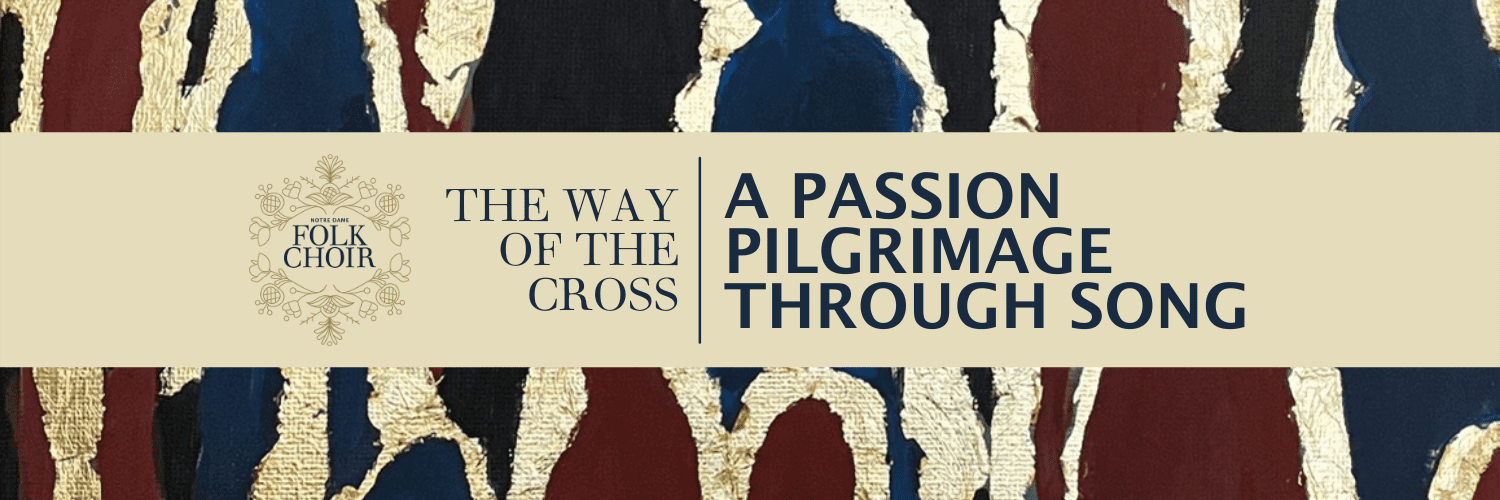
Led by Grammy® Award winner and Director of the Notre Dame Folk Choir Dr. J.J. Wright, encounter The Passion, a new artistic production combining Scripture with original poetry and set to original music.
Through Christ’s Passion, we learn to encounter suffering and incarnate love, to behold one another in our “not-enoughness.” As we enter the upcoming Lenten and Easter seasons, journey with the Folk Choir and some of our closest collaborators through the development, rehearsal, and performance process of The Passion. Along the way, we will explore the Passion and Resurrection in light of the most pressing issues on the minds of our students, including the clergy sexual abuse crisis, the role of women in the Church, and climate change.
Experience the Episode
Presented by Notre Dame Folk Choir
Journey with the Notre Dame Folk Choir as they bridge theology and art to navigate the “wicked problems” of betrayal, climate change, and institutional crisis. The Notre Dame Folk Choir’s Passion translates the ancient narrative of Christ’s suffering into an artistic reflection on our vulnerability. By engaging modern grievances through contemporary song, The Passion creates a liturgical space where alumni and scholars can confront the Church’s most complex crises. This work moves beyond traditional performance, acting as a transformative vehicle for the communal processing of institutional and global trauma.
Click below to watch the video of this conversation.
Click below to listen to the audio podcast of this conversation.
Subscribe to the ThinkND podcast on Apple, Spotify, or Google.
MoreA Peek Behind the Curtain: Collaboratively Writing Lyrics for the Agony
Please hover over the yellow speech bubbles to see the comments of the collaborators as the lyrics were being written and get a peek behind the curtain into the writing process of creating the Agony in the Garden for the Folk Choir stage.
Meet the Speaker: Tristan Cooley
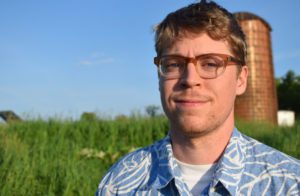
Tristan Cooley is a poet, librettist, and fiction writer from Silver Spring, MD, and served as the librettist for The Passion. He holds a BFA from The New School for Jazz and Contemporary Music and an MA from CUNY, Brooklyn College. He makes his home in Vermont. Current collaborators include the University of Notre Dame Folk Choir under the direction of J.J. Wright, and the theatrical production house Sounds & Voices, led by Dominic Mekky and Franky Rousseau.
Meet the Speaker: Eric Styles
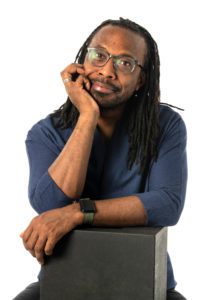
Eric T. Styles, since 2016, has served as the Rector of Carroll Hall, an intentional undergraduate residential community at the University of Notre Dame. A Chicago native, he holds degrees from the University of Cincinnati and Loyola University Chicago. Eric worked as a Parish Liturgy Coordinator at Saint Benedict the African Catholic Church in Chicago and as a House Manager for the Theatre School of DePaul University. He discerned religious life for seven years with the Society of Jesus, during which time he prayed the thirty day retreat designed by St. Ignatius Loyola and received formal training in spiritual direction. He later left the Jesuits and eventually found his way to Saint Mary’s University of Minnesota, where he worked as a Campus Minister for Liturgy and Faith Formation. Now at Notre Dame, he continues to assist as a retreat leader and an occasional spiritual director. Eric remains active in the performing arts as a collaborator with Afro House, a Baltimore based music driven performance art ensemble. Eric writes about theology, liturgy, and contemporary culture for publications like America, Church Life Journal, and U.S. Catholic. He is deeply interested in the intersections of ritual, performing arts, communal identity, and the interior life. Eric is the co-host of Meet Father Rivers, a podcast about the extraordinary liturgical and musical contributions of Father Clarence-Rufus Joseph Rivers.
A Lenten 2026 Reflection from the Notre Dame Senior Alumni
Dear Alumni and Friends,
Wicked problems seem to meet us at every turn in life. By definition, they are complex challenges that require broad stakeholder engagement, involve many interdependencies, and resist a single right answer or clear solution.
Throughout my career as an architect, clients often brought their wicked problems to me, seeking design solutions to improve their lives and environments. The first—and most essential—step was always defining the problem. More often than not, that meant establishing a thoughtful decision-making process so the final design could truly create a better place for employees, visitors, and neighbors—easier said than done. Together, we developed ways to uncover needs and gather meaningful feedback from users about their spaces, interactions, and work. For one new corporate headquarters, we surveyed all 200 employees to identify barriers to productivity. Addressing their individual and shared concerns allowed us to define the challenge across architectural, interior, mechanical, electrical, structural, landscape, and environmental systems. From there, we proposed design options that balanced cost and schedule for the owner’s consideration. In the end, a solution emerged—not as a single gesture, but the result of a shared process—led by the design and construction team, informed by employee input, and refined through approval by the owner and the corporate board.
As seniors, many of the wicked problems we face are beyond our control. We are often just one voice among many. I have encountered this most recently in the medical field. After undergoing my fifth surgery on my right knee, a total knee replacement performed by a highly experienced surgeon, I initially progressed ahead of schedule. Then, months later, persistent pain emerged. Because of my prior surgeries and activity level, my situation did not follow a typical pattern. What began as a straightforward medical issue became a wicked problem, one that no single member of the care team could solve. By engaging multiple perspectives and through the empathetic persistence of a physical therapist I am gradually finding a path toward healing and returning to an active life.
During this Lenten Season, as I reflect on Christ’s journey, I ask how I might help create spaces for honest, compassionate dialogue about the wicked problems of our time, in politics, families, and personal struggles, always in pursuit of the greater good.
Warmly,
Shelley Muller Simon ‘76
Engagement Officer
Notre Dame Senior Alumni Board