

A Conversation about Legacy: Apartheid’s Shadow
In celebration of Black History Month 2026 and as one of many signature events commemorating the 40th anniversary of the Black Alumni of Notre Dame, Notre Dame clubs around the country are invited to host a screening of the documentary Legacy: Apartheid’s Shadow, the directorial debut of award-winning South African documentarian, Tara E. Moore. Moore recently joined Notre Dame professors Mark Sanders and Ted Mandell in a special companion conversation about the film’s “global call to confront the past in order to re-imagine a more equal future.”
Experience the Episode
Saturday, February 21, 2026 4:00 pm
In celebration of Black History Month 2026 and as one of many signature events commemorating the 40th anniversary of the Black Alumni of Notre Dame, Notre Dame clubs around the country are invited to host a screening of the documentary Legacy: Apartheid’s Shadow, the directorial debut of award-winning South African documentarian, Tara E. Moore. Moore recently joined Notre Dame professors Mark Sanders and Ted Mandell in a special companion conversation about the film’s “global call to confront the past in order to re-imagine a more equal future.” We are honored to share this meaningful context for the film below. Join us!
Notre Dame clubs wishing to host a viewing of the full documentary on February 21, 2026 can RSVP HERE to receive the screening link and password.
MoreMeet the Filmmaker: Tara E. Moore

Tara Erica Moore is the award-winning South African director of the 2025 Oscars® contender, Legacy: Apartheid’s Shadow. The film, described by Variety as a “People’s history of South Africa”, reflects her belief in the power of media to change the world.
Born during Apartheid, and raised between South Africa and Connecticut, her bi-continental upbringing, along with her biracial identity (she is of South Asian and English descent), greatly informs her film-making perspective.
Tara holds a BA from Wesleyan University and an MBA from UCLA Anderson.
For more information about her work, please visit her website.
Meet the Faculty: Ted Mandell '86
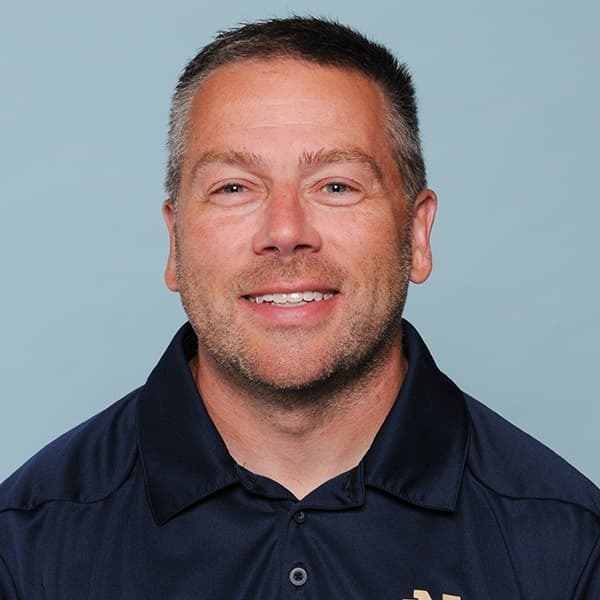
Ted Mandell has taught film and television production at Notre Dame for the past 36 years. Specializing in documentary filmmaking, and past producer/director of numerous features on Notre Dame Athletics, Ted is co-director of the documentary 88 and 1 (ESPN), the award winning documentary Okuyamba, and producer of the documentary series First Time Fans. Ted is also in charge of the annual Notre Dame Student Film Festival, faculty advisor for the student producer program at Notre Dame Studios, and director of two Summer Scholars programs for high school students (Film Production and Under The Influence: Teens and Screens). Besides production courses, he also teaches the undergraduate course, Drunk on Film: The Psychology of Storytelling with Alcohol and Its Effects on Alcohol Consumption (co-taught with professor Anré Venter). In addition, Ted has penned numerous national op-ed columns on media and popular culture, and is the author of the multimedia book Heart Stoppers and Hail Marys: The Greatest College Football Finishes (Since 1970).
Meet the Faculty: Mark Sanders

Mark Sanders is the chair of the Department of Africana Studies at the University of Notre Dame. A professor of English and Africana Studies, Sanders specializes in American modernism and the Harlem Renaissance, American and African American poetics, race theory, the African American novel, African American autobiography, and Afro-Latin American Literature and culture. His publications include Semantics of the World: Selected Poems of Rómulo Bustos Aguirre (co-edited and co-translated with Nohora Arrieta Fernández), A Black Soldier’s Story: The Narrative of Ricardo Batrell and the Cuban War of Independence, Sterling A. Brown’s A Negro Looks at the South (co-edited with John Edgar Tidwell), and Afro-Modernist Aesthetics and the Poetry of Sterling A. Brown.
Sanders’s undergraduate and graduate courses on exploring issues of racial and cultural identity, citizenship, and freedom across the Western Hemisphere.