

History of Philosophy
Explore Thomas Aquinas' rigorous engagement with the Falsafa tradition. From the mechanics of the soul to the dignity of science, discover how his relational rationality bridges medieval wisdom and modern inquiry. Listen in as we synthesize these timeless metaphysical debates for the contemporary professional.
Experience the Event
Explore Thomas Aquinas’ rigorous engagement with the Falsafa tradition. From the mechanics of the soul to the dignity of science, discover how his relational rationality bridges medieval wisdom and modern inquiry. Listen in as we synthesize these timeless metaphysical debates for the contemporary professional.
The comprehensive and systematic character of Thomas Aquinas’ thought has for centuries informed inquiry into questions of human dignity, freedom, economic development, work, poverty, the environment, and other issues of global significance. Celebrate the 800th anniversary of the birth of Thomas Aquinas, exploring the ongoing importance of his thought to contemporary cultural, philosophical, and theological discussions. In gathering many of the most accomplished contemporary scholars of Aquinas’ thought from throughout the world working on themes in Ethics, Metaphysics, Epistemology, Anthropology, Political Theory, Christology, Trinitarian Theology, Sacramental Theology and Ecclesiology, among others, this series promotes fruitful interchange of diverse perspectives on the importance of Aquinas in the world today.
MoreMeet the Speaker: Stephen Ogden
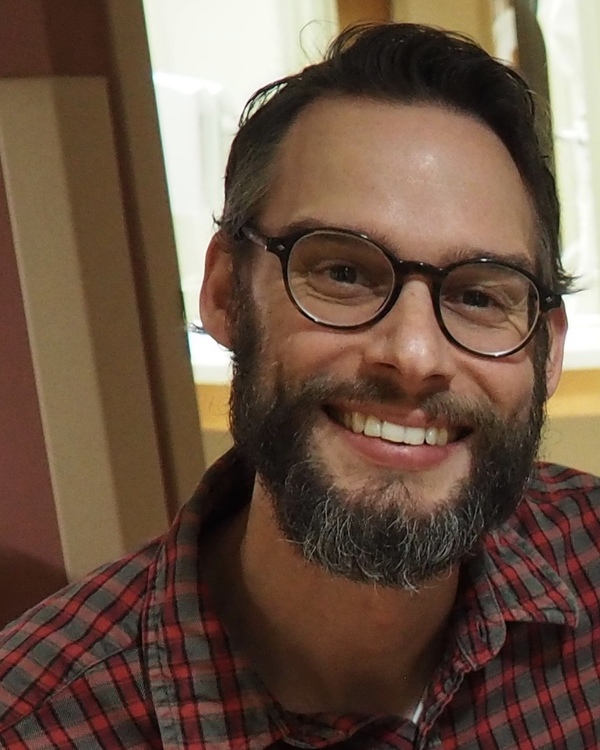
Stephen Ogden is the Tracey Family Associate Professor of Philosophy at the University of Notre Dame. He came to Notre Dame in 2021, after teaching for several years at The Catholic University of America. Prior to that he was a Mellon Postdoctoral Fellow at Johns Hopkins University. He earned his Ph.D. in Philosophy and Religious Studies at Yale University in 2015, an M.A.R. in Philosophy of Religion at Yale Divinity School, and a B.A. in Philosophy and Religious Studies at Rhodes College in Memphis. After undergrad, he lived and taught in Egypt.
He likes a very wide spectrum of philosophy, but his primary research interests are in classical Islamic philosophy, especially the psychology, metaphysics, and epistemology of Averroes (Ibn Rushd) and Avicenna (Ibn Sīnā). He also works in medieval and ancient philosophy more broadly, as well as philosophy of religion. His new book is Averroes on Intellect: From Aristotelian Origins to Aquinas’s Critique (Oxford University Press, 2022).
Meet the Speaker: Katja Krause

Katja Krause is a research group leader at Max Planck Institute for the History of Science. She is historian of science and a philosopher specializing in medieval thought and beyond. She received her PhD in 2014 from King’s College London for her dissertation entitled “Aquinas’ Philosophy of the Beatific Vision: A Textual Analysis of his Commentary on the Sentences in Light of Its Greek, Arabic, and Latin Sources.” After her doctorate, Krause was awarded a two-year postdoctoral fellowship at the Max Planck Institute for the History of Science, where she worked on a series of articles examining the empirical turn of the thirteenth century that emerged from the appropriation of Averroes’ commentaries on the corpus Aristotelicum. In 2016/17 she served as Assistant Professor in Medieval Thought at Durham University, UK, and in 2017/18 was a postdoctoral fellow at Harvard Divinity School, supported by the Deutsche Akademie der Naturforscher Leopoldina – Nationale Akademie der Wissenschaften. Katja Krause is currently Leader of the Max Planck Research Group “Experience in the Premodern Sciences of Soul & Body, ca. 800–1650,” jointly with a professorship at the Technische Universität Berlin.
Katja Krause has recently completed the edited volumes Premodern Experience of the Natural World in Translation (edited with Maria Auxent and Dror Weil, Routledge 2022), Contextualizing Premodern Philosophy: Explorations of the Greek, Hebrew, Arabic, and Latin Traditions (edited with Luis Xavier López-Farjeat and Nicholas Oschman, Routledge 2023), and Albert the Great and His Arabic Sources: Medieval Science between Inheritance and Emergence (edited with Richard C. Taylor, Brepols 2024). Her translation of Thomas Aquinas’s Commentary on Peter Lombard’s Sentences IV.49.2, with introductions and notes, appeared in autumn 2020 with Marquette University Press.
Meet the Speaker: Richard C. Taylor
Richard C. Taylor, Marquette University Philosophy Department professor and member of the De Wulf-Mansion Centre for Ancient, Medieval and Renaissance Philosophy at the Katholieke Universiteit Leuven in Belgium, has co-taught the KU Leuven graduate course, “Aquinas in Context,” with Prof. Andrea Robiglio of KU Leuven annually since 2011. This course is often linked with a graduate course on Aquinas taught at Marquette through the use live video internet technology. He has also held a Fulbright teaching and research fellowship for short term courses at Marmara University, Istanbul, Turkey, the University of Pisa, Italy, and the Katholieke Universiteit Leuven, Belgium. Prof. Taylor is also a Cooperating Partner in the Jena University DFG-Research Training Group 2792: Autonomy of Heteronomous Texts in Antiquity and the Middle Ages.
His work has ranged from the Greek philosophical tradition and the entré of philosophy into the lands of Islam in the ninth century in the Plotiniana Arabica and the Discourse on the Pure Good (Latin: Liber de causis), through the classical rationalist tradition of al-Farabi, Ibn Sina / Avicenna, and especially Averroes, to the influence of these writings in Latin on the thought of Thomas Aquinas and his teacher Albert the Great in the thirteenth century. He is active as director of the Aquinas and ‘the Arabs’ International Working Group (AquinasAndTheArabs.org) since its inception in 2005 and founding editor of the Brepols series, Philosophy in the Abrahamic Traditions of the Middle Ages. He is past president of the American Catholic Philosophical Association, past president the Society for Medieval and Renaissance Philosophy, and current vice-president of the Société Internationale D’Histoire des Sciences et de la Philosophie Arabes et Islamiques.