

The Legacy of Natural Rights

How can we best understand self-governance and see a path forward for a free and flourishing society? Sift through the foundational ideas of the American project as you weigh the enduring power of natural rights. Navigate complex legal histories to grasp how ancient wisdom shapes our modern liberties.
Experience the Event
Presented by Center for Citizenship & Constitutional Government
Sift through the foundational ideas of the American project as you weigh the enduring power of natural rights. Jud Campbell, professor of law and the Helen L. Crocker Faculty Scholar at Stanford Law School, leads a panel that navigates complex legal histories to grasp how ancient wisdom shapes our modern liberties. Transform your understanding of self-governance and illuminate the civic path forward for a free and flourishing society.
“The Legacy of Natural Rights” was presented as the concluding event in the 2026 True Lecture Series. Inaugurated in the fall of 2024, the True Lecture Series is made possible through the generous support of Tad and Jenn True. This annual lecture series was created to foster the production of scholarly manuscripts of great significance by major scholars that relate to the principles and practices of American Constitutionalism.
In what sense are “all men . . . created equal”? What is human liberty? What is prosperity, and how is wealth created? In 1776 these questions were addressed and acted upon in ways that have created the modern world. Commemorating the 250th anniversary, explore 1776 and the ideas that made the modern world, focusing on the Declaration of Independence and Adam Smith’s Wealth of Nations.
1776 and the Ideas That Made the Modern World, taught by Vincent Phillip Muñoz, Tocqueville Professor of Political Science and Concurrent Professor of Law at the University of Notre Dame and the Founding Director of ND’s Center for Citizenship & Constitutional Government, and James Otteson, John T. Ryan Jr. Professor of Business Ethics in the Mendoza College of Business is sponsored by the Center for Citizenship and Constitutional Government at the University of Notre Dame. To find out more, please visit their website.
To sign up to connect with the Center for Citizenship and Constitutional Government by receiving their email newsletters, please use this subscription form.
MoreMeet the Speaker: Jud Campbell
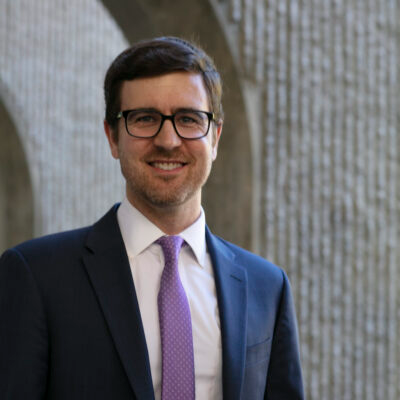
Jud Campbell is a professor of law and the Helen L. Crocker Faculty Scholar at Stanford Law School. He previously served as a professor of law at the University of Richmond School of Law and has been a visiting professor of law at the Harvard Law School, New York University School of Law, and the University of Chicago Law School. His academic focus is constitutional history and First Amendment law. His publications include articles in the Harvard Law Review, Stanford Law Review, and Yale Law Journal. After completing his J.D. at Stanford Law School, he clerked for Judge Diane S. Sykes on the U.S. Court of Appeals for the Seventh Circuit, and for Judge José A. Cabranes on the U.S. Court of Appeals for the Second Circuit. He then served as the Executive Director of the Stanford Constitutional Law Center. He holds a bachelor’s degree from the University of North Carolina at Chapel Hill and two master’s degrees from the London School of Economics, where he studied as a Marshall Scholar.
Meet the Speaker: Philip Hamburger
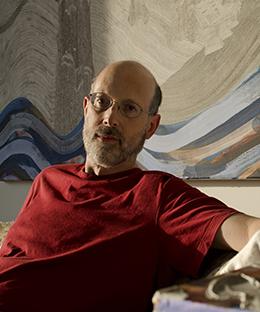
Philip Hamburger is the Maurice & Hilda Friedman Professor of Law at Columbia Law School. A leading scholar of constitutional law and its history, Philip Hamburger has transformed contemporary understandings of free speech, religious liberty, judicial duty, and the administrative state. His ideas have led the Supreme Court to overturn Chevron deference, restore jury rights, and curb administrative power.
In his path-breaking Separation of Church and State (Harvard 2002), Hamburger dismantles the myth that the First Amendment mandates the separation of church and state. Drawing on deep historical research, he reveals that the notion of separation flourished in nativist and theologically liberal assaults on Catholicism and other orthodoxies. In the twentieth century, this sort of theological prejudice, prominently pursued by the Ku Klux Klan, introduced separationism into constitutional doctrine.
His insight about the judges’ duty of independent judgment underlay the Supreme Court’s 2024 decision in Loper Bright Enterprises v. Raimondo, which repudiated Chevron deference and reclaimed the judges’ independence in interpreting statutes.
After teaching at the University of Chicago, Hamburger moved to Columbia Law School. He founded the school’s Galileo Center to champion free speech and academic freedom. He also co-founded and co-chairs the Columbia Academic Freedom Council, which in 2025 honored 30 scholars with Academic Freedom Awards for their commitment to freedom of speech.
Hamburger’s contributions have earned him more than a half-dozen prizes, including the Hayek Book Prize, the Bradley Prize, and the Barry Prize for Distinguished Academic Achievement. He is a member of the American Academy of Sciences and Letters and the American Academy of Arts and Sciences.
Meet the Speaker: Thomas West
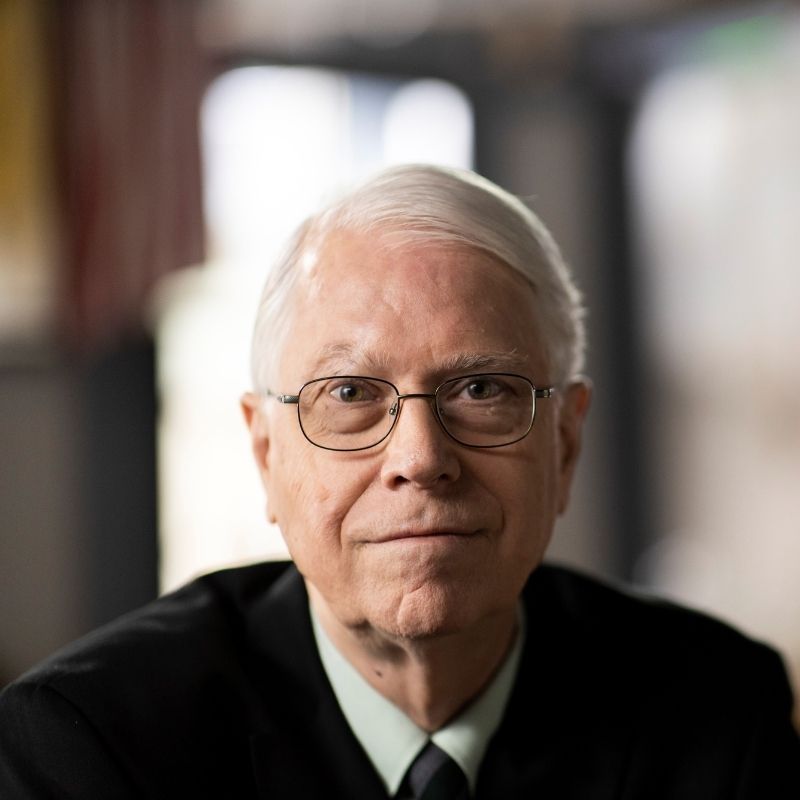
Thomas West holds the Paul Ermine Potter and Dawn Tibbetts Potter Endowed Professorship in Politics, Professor of Politics at the Van Andel Graduate School of Statesmanship at Hillsdale College. Prior to joining the faculty at Hillsdale, he was a Professor of Politics at the University of Dallas, where he taught from 1974 to 2011.
He served in Vietnam as a Lieutenant in the U.S. Army in 1969-70. He was Bradley Resident Scholar at the Heritage Foundation in 1988-89 and Salvatori Visiting Scholar at Claremont McKenna College from 1990-92.
West’s Vindicating the Founders: Race, Sex, Class, and Justice in the Origins of America (Rowman & Littlefield, 1997) was the winner of the Bagehot Council’s Paolucci Book Award for 2000, for the best book in American history or politics.
He received his B.A. at Cornell in 1967 and his Ph.D. at Claremont Graduate University in 1974.