
The Ideas That Made the Modern World

Explore the revolutionary convergence of 1776, where liberty and prosperity intertwined, as you interrogate the profound legacy of the Declaration of Independence alongside Adam Smith’s economic breakthroughs in The Wealth of Nations.
Experience the Event
Presented by Center for Citizenship and Constitutional Government
Explore the revolutionary convergence of 1776, where liberty and prosperity intertwined, as you interrogate the profound legacy of the Declaration of Independence alongside Adam Smith’s economic breakthroughs in The Wealth of Nations. By analyzing human flourishing and the unprecedented material increase in human prosperity, accompany other seekers of justice as you equip yourself to navigate today’s complex political and material landscape.
To read along with the class, enjoy the following:
- Nikole Hannah-Jones, “The Idea of America,” from the 1619 Project, New York Times Magazine, August 18, 2019
- “Adam Smith Is Misinterpreted and His Influence Is Overstated,” The Economist, December 18, 2025
- Class slides can be found here.
In what sense are “all men . . . created equal”? What is human liberty? What is prosperity, and how is wealth created? In 1776 these questions were addressed and acted upon in ways that have created the modern world. Commemorating the 250th anniversary, this special series explores 1776 and the ideas that made the modern world, focusing on the Declaration of Independence and Adam Smith’s Wealth of Nations.
1776 and the Ideas That Made the Modern World, taught by Vincent Phillip Muñoz, Tocqueville Professor of Political Science and Concurrent Professor of Law at the University of Notre Dame and the Founding Director of ND’s Center for Citizenship & Constitutional Government, and James Otteson, John T. Ryan Jr. Professor of Business Ethics in the Mendoza College of Business is sponsored by the Center for Citizenship and Constitutional Government at the University of Notre Dame. To find out more, please visit their website.
To sign up to connect with the Center for Citizenship and Constitutional Government by receiving their email newsletters, please use this subscription form.
MoreMeet the Faculty: Vincent Phillip Muñoz
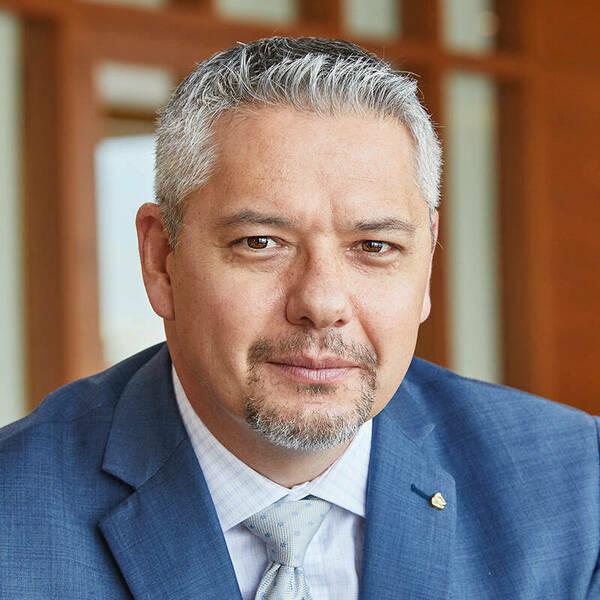
Vincent Phillip Muñoz is the Tocqueville Professor of Political Science and Concurrent Professor of Law at the University of Notre Dame. He is also the Founding Director of ND’s Center for Citizenship & Constitutional Government. Dr. Muñoz writes and teaches across the fields of constitutional law, American politics, and political philosophy with a focus on religious liberty and the American Founding. He won a National Endowment for the Humanities fellowship to support his most recent book, Religious Liberty and the American Founding: Natural Rights and the Original Meanings of the First Amendment Religion Clauses (2022), published by the University of Chicago Press. Dr. Muñoz’s first book, God and the Founders: Madison, Washington, and Jefferson (Cambridge University Press, 2009) won the Hubert Morken Award from the American Political Science Association for the best publication on religion and politics in 2009 and 2010.
Meet the Faculty: James Otteson

James Otteson is the John T. Ryan Jr. Professor of Business Ethics in the Mendoza College of Business at the University of Notre Dame, where he also serves as the Honors Program Faculty Director. He specializes in business ethics, political economy, the history of economic thought, and eighteenth-century moral philosophy. His books include Adam Smith’s Marketplace of Life (Cambridge, 2002), Actual Ethics (Cambridge, 2006), Adam Smith (Bloomsbury, 2013), The End of Socialism (Cambridge, 2014), The Essential Adam Smith (Fraser Institute, 2018), and Honorable Business: A Framework for Business in a Just and Humane Society (Oxford, 2019). His most recent books are The Essential David Hume (Fraser, 2021), Seven Deadly Economic Sins (Cambridge, 2021), and Should Wealth Be Redistributed? A Debate (with Steven McMullen; Routledge, 2023).